
The Continued Descent
Days 11-14, Olo Canyon to Diamond Creek, Mile 146-226

As you travel downstream from Lees Ferry (Mile 0), the elevation of the Colorado River steadily decreases.
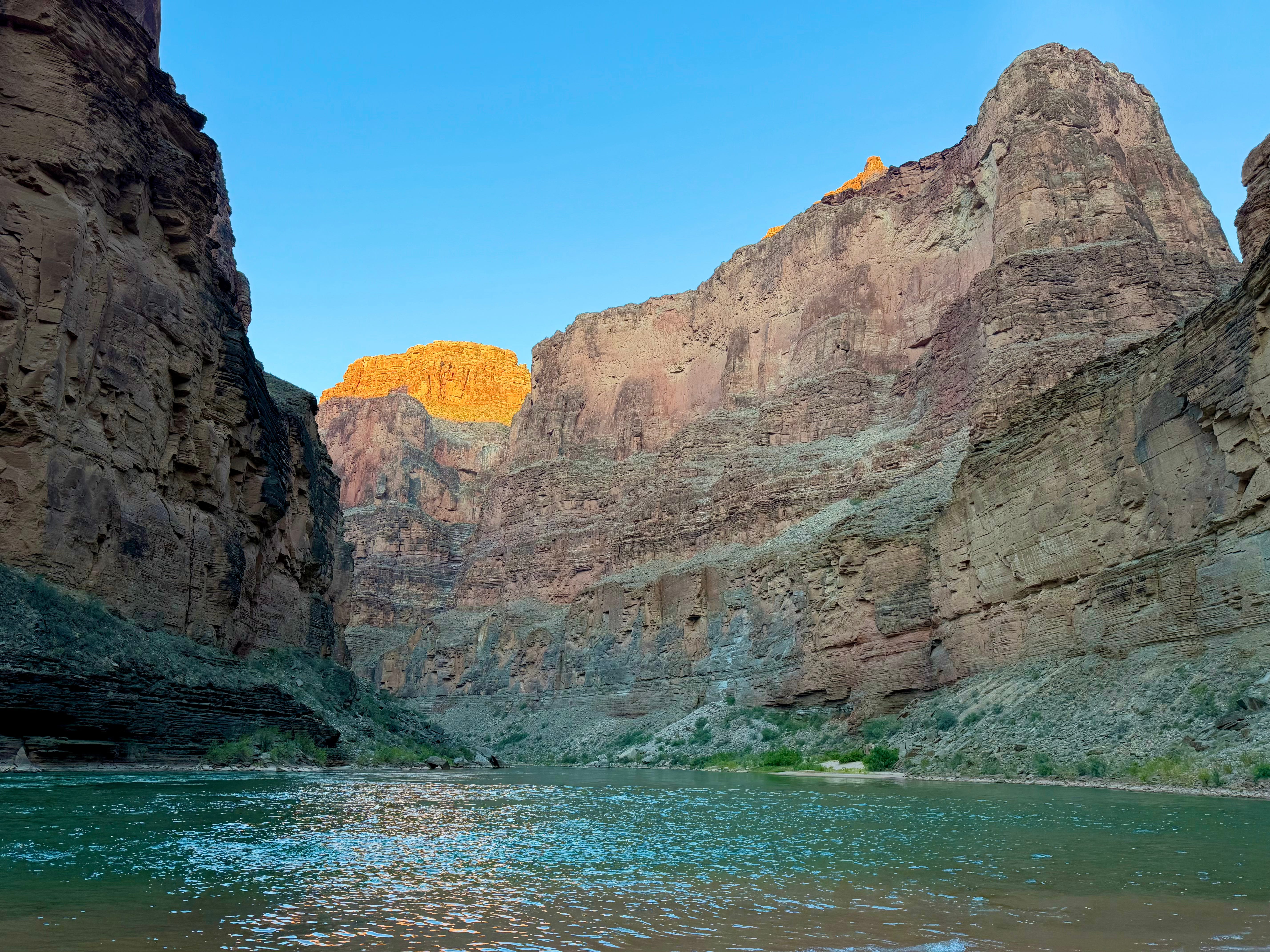
By the time we reached Diamond Creek, after fourteen days and 226 miles, we found ourselves nearly 1,800 vertical feet lower than where we launched. The farther we descended, the higher the daily temperatures climbed. Though beautiful, the skies were cloudless and the sun constant as the heat grew more intense with each passing mile.
Day 11, Olo Canyon to Fern Glen, Mile 146-169.
From my journal:
Best sleep last night! Perfect temp, no wind or sand, and, oh, the stars!!
I wake at night, and the sky covers me in wondrous mystery. I try to comprehend what I am seeing. Who am I? How can my minuscule life amount to anything in this galaxy in which there is no beginning and no end? Yet somehow, in the midst of it all, life seems more meaningful than ever.
6:00 am - Coffee call. We slept in a bit after our pre-dawn rendezvous with the Milky Way. After a simple breakfast of bagels, cereal, donuts, and fruit, we were off. (I noted in my journal that I skipped breakfast. Despite the exercise I was getting, after ten days of three substantial daily meals, I was feeling a bit chunky.)
The S-rig went ahead to run Upset Rapid (Mile 150) then dropped off those who wanted to shoot the action from a ridge above the bank. They hauled their gear and set up with a view downriver as the rest of us ran the rapid.
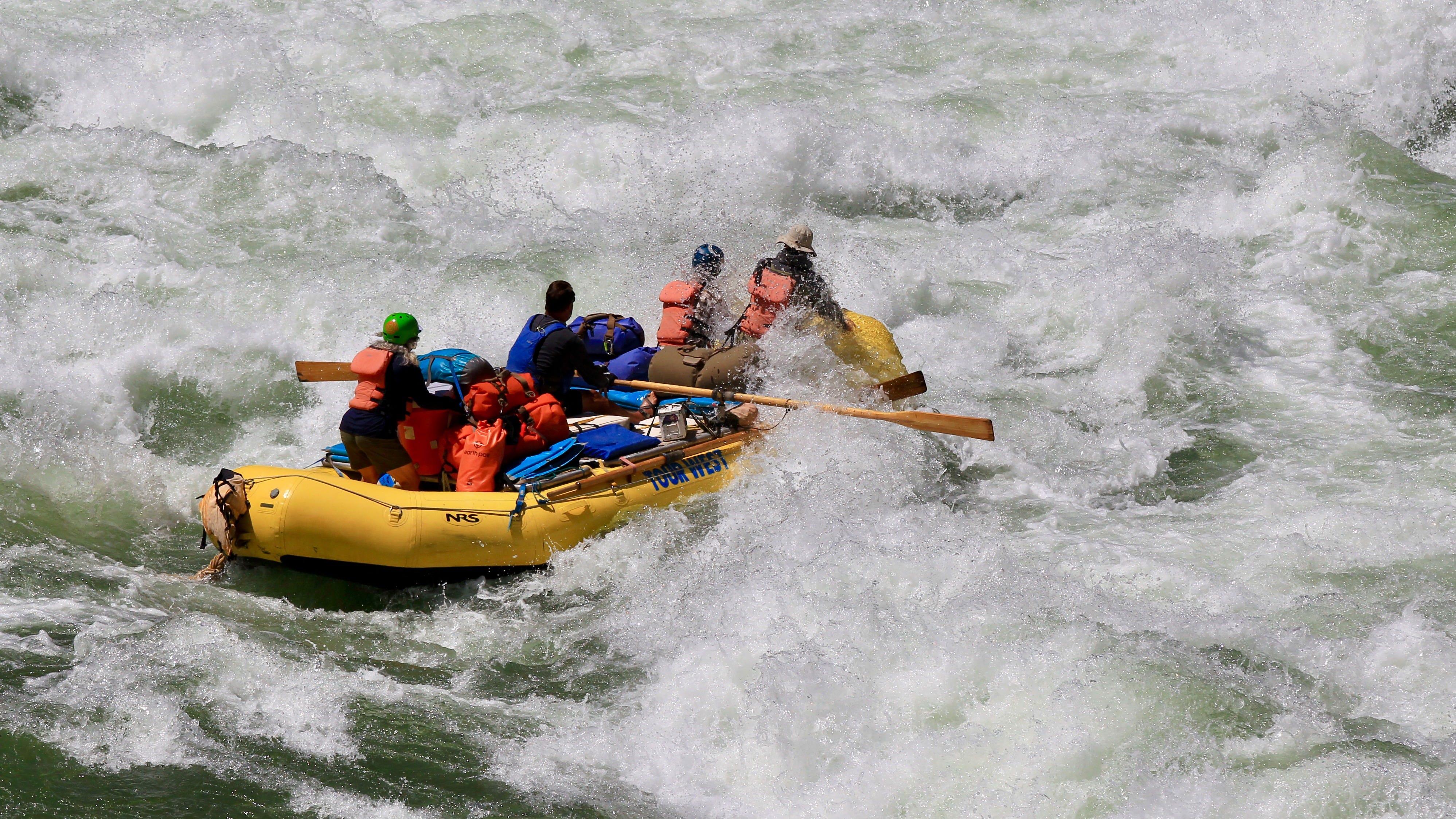
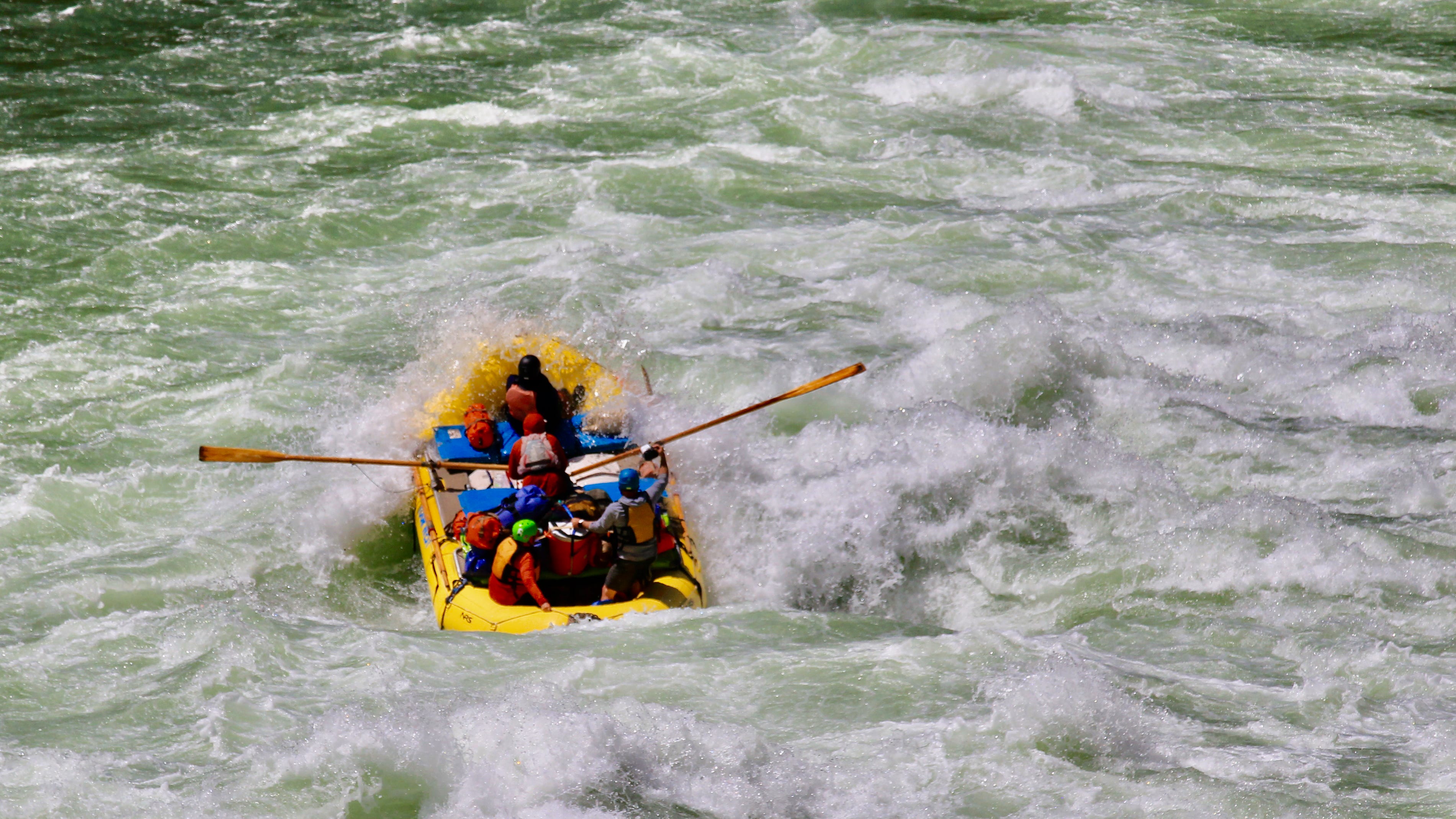
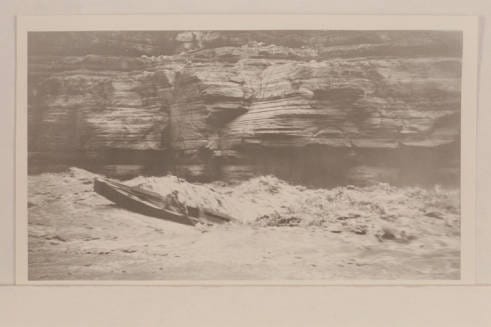
Three guesses how Upset Rapid got its name. Answer: From Emery Kolb, one of the Kolb brothers and co-owner of Kolb Studio on the South Rim, after he capsized there in 1923. Here’s a copy of a photo taken moments before he flipped his boat.
Instructions I overheard from one boatman to another on strategy: Pull hard to the left. Don’t hit the hole halfway on the right, then push!
9:45 am: We were past Upset, and Bugs declared us ahead of schedule. We had entered the Muav Gorge, a section where the Colorado cuts through the Muav Limestone, which is part of the Cambrian-age Tonto Group, 500 million years old. The Lower Muav is where we will take out in a few days.
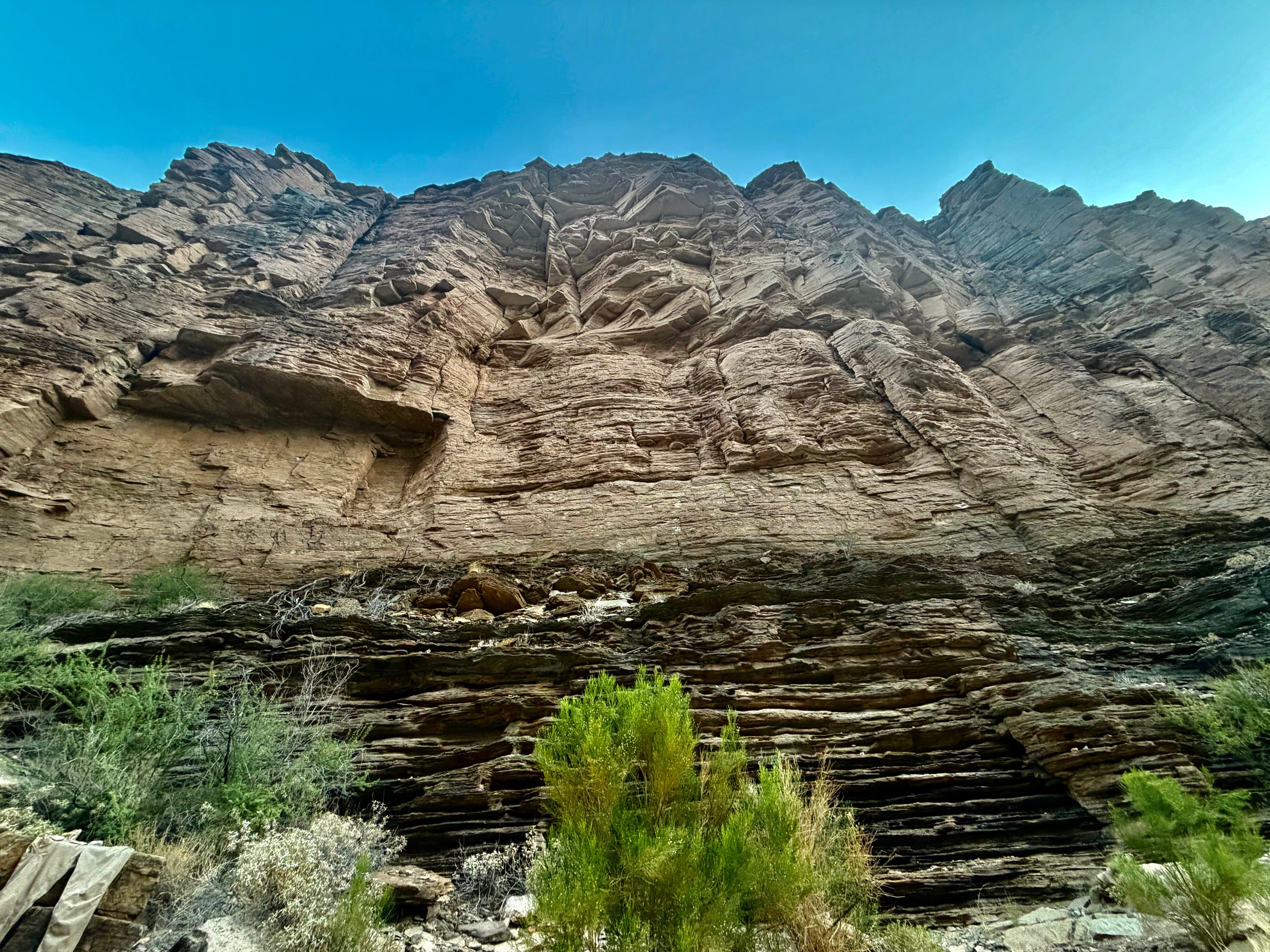
I learned that our guides will travel another 70 miles after they drop us off at Diamond Creek; 35 of those will be rapids, after which they will deflate the tubes on the S-Rig, attach the smaller rafts to it, and cruise for the remainder of their trip.
Spending hours each day in a small boat allowed time for river stories, which I encouraged and loved listening to. Bugs—who was on his 69th run and 10th season on the river—told me about two of his most memorable guests. One was a man with advanced prostate cancer who knew he didn’t have much time left. Another was a man suffering from Alzheimer's, who took a particular liking to Bugs and proceeded to reminisce about his past, telling stories that his accompanying family members hadn’t heard in years, if ever.
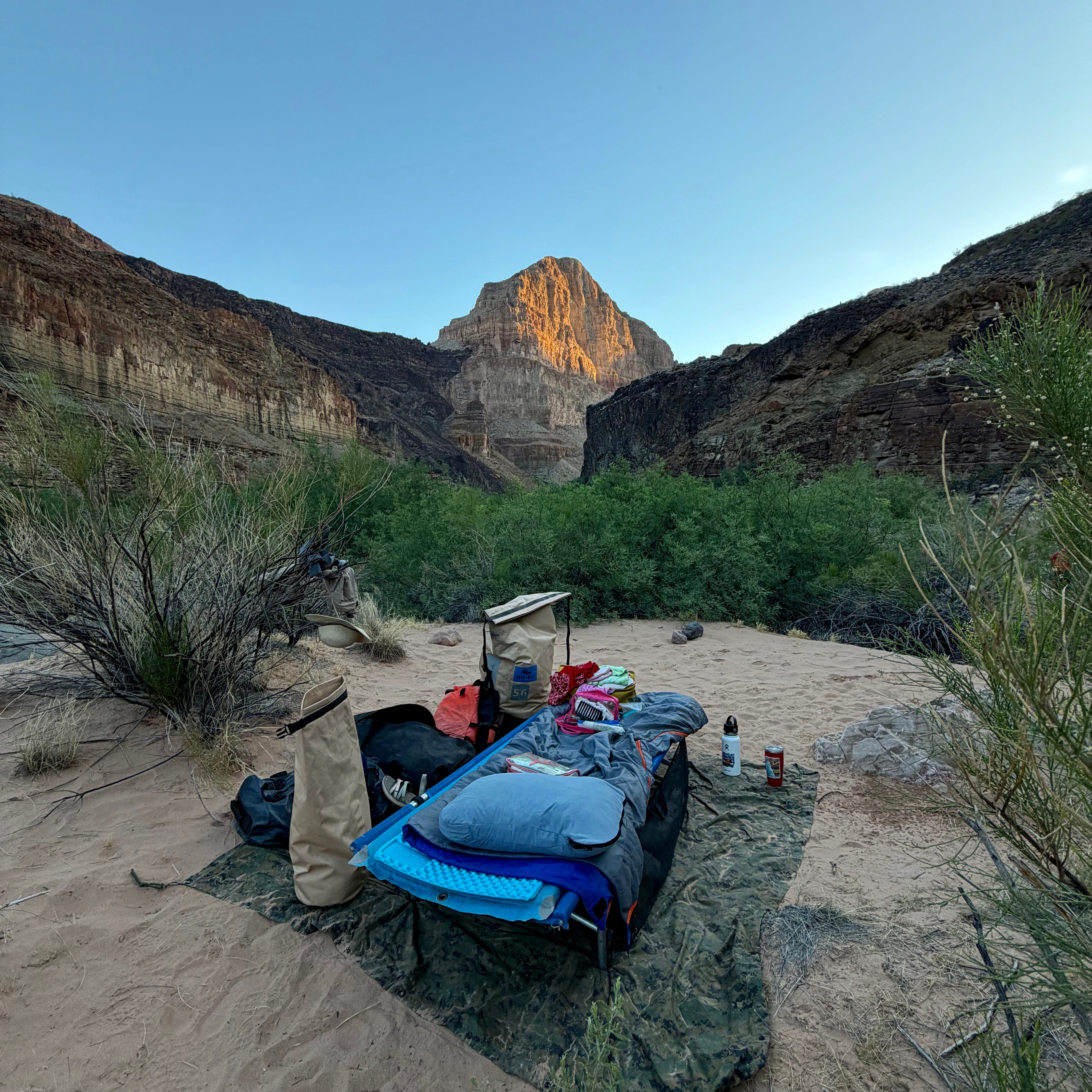
3:30 pm - We made camp at Fern Glen, Mile 168. Although it was relatively comfortable in the shade, the sun was so relentless that I could not touch the metal cot poles to set up my bed.
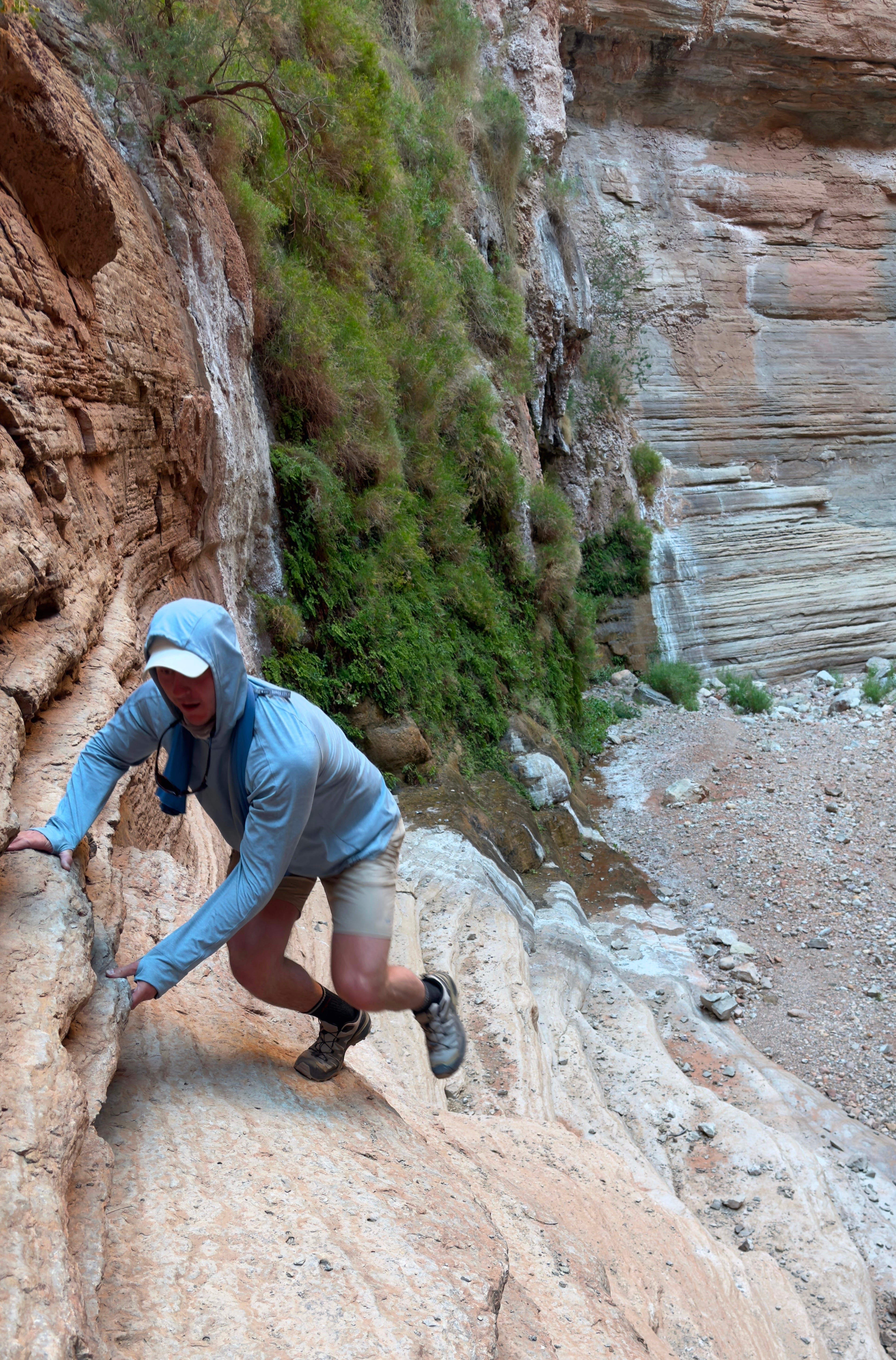
Bruce and Travis invited me to take a hike with them, which I very much wanted to do. However, due to my “Shrek feet,” which no longer fit into my hiking shoes, I declined the offer. In hindsight, it probably turned out for the best. See photo below…
Day 12, Fern Glen to Lower Whitmore, Mile 168-188.
5:45 am - Wake up call compliments of Bugs, “Goooood Morning, Grand Caaaaaaanyon!
We were expecting a long day ahead with temps over 100 degrees. There was a palpable shift in the energy by day eleven. The days were hotter, and the river offered less variation. Sheets, pillowcases, every article of clothing was dirty, if not filthy. We would soon run out of ice for water, much less for any other drinks. We were growing more sun-worn and weary each day, but the canyon never failed to revive me.
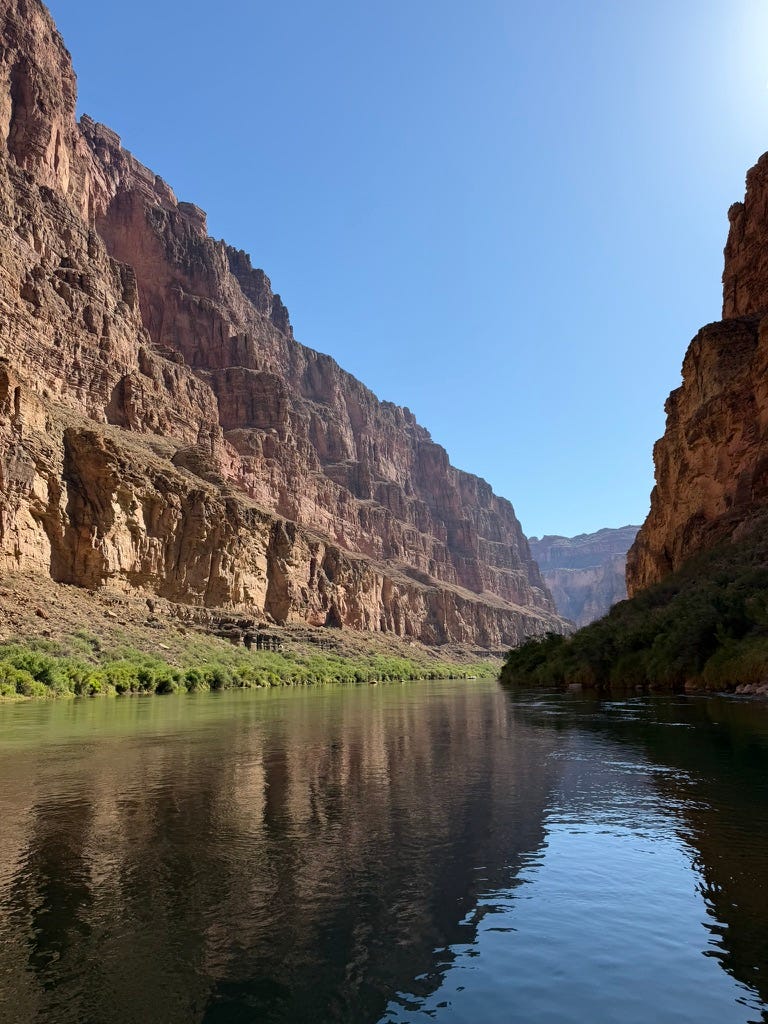
11:00 am - At Mile 180, we stopped so some of us could hike up to watch the others run Lava Falls (Vulcan) Rapid, a particularly long rapid with a 14’ drop. “Three big waves!” I noted on my map. I will post a video I took on Instagram if you’re interested in the live action. @notplainjaynemills.
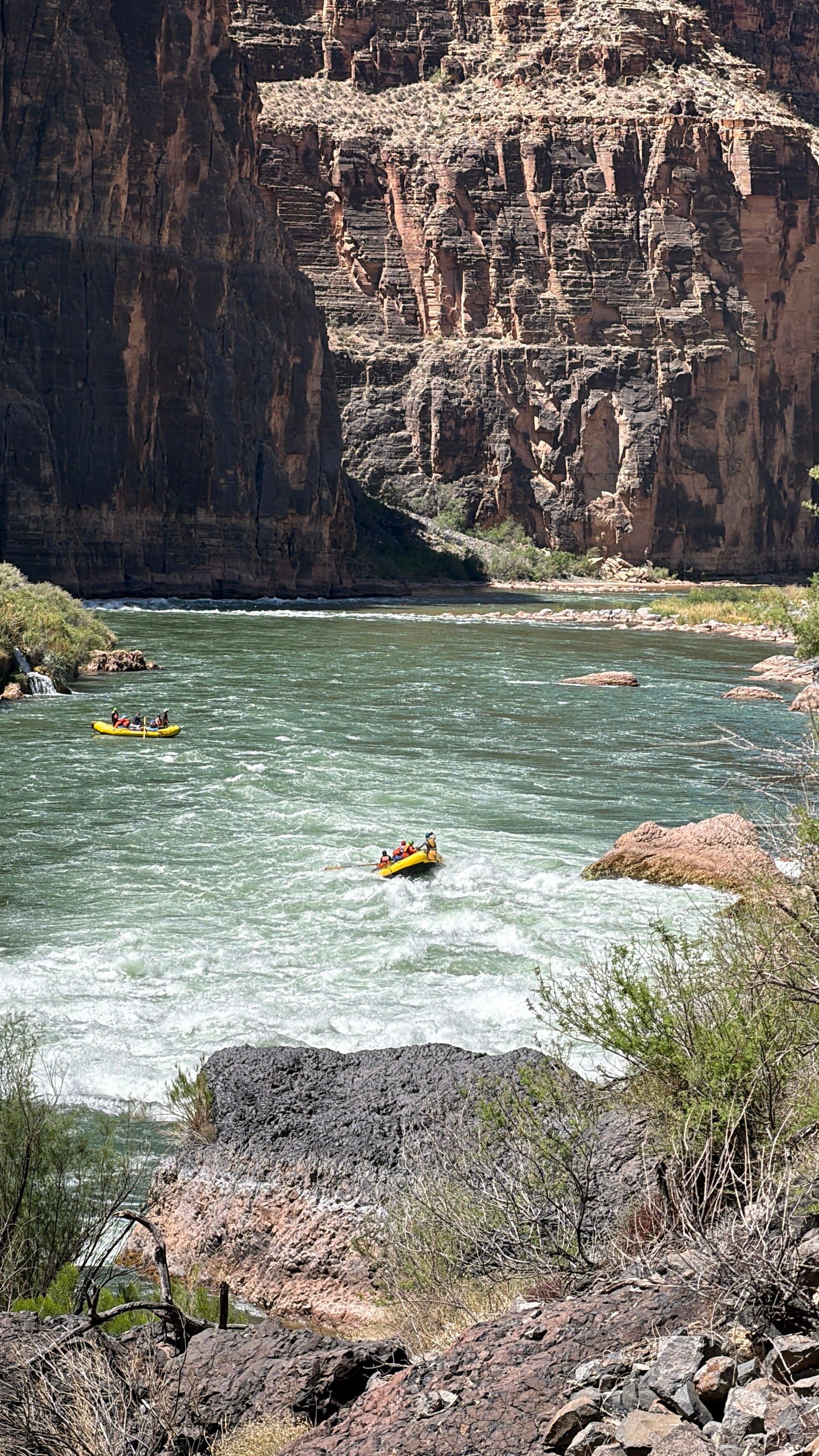
Vulcan’s Anvil is a volcanic remnant protruding in the middle of the river and is considered sacred by Native Americans; a 50-foot-tall vertical volcanic plug rising from the deceptively calm pool.
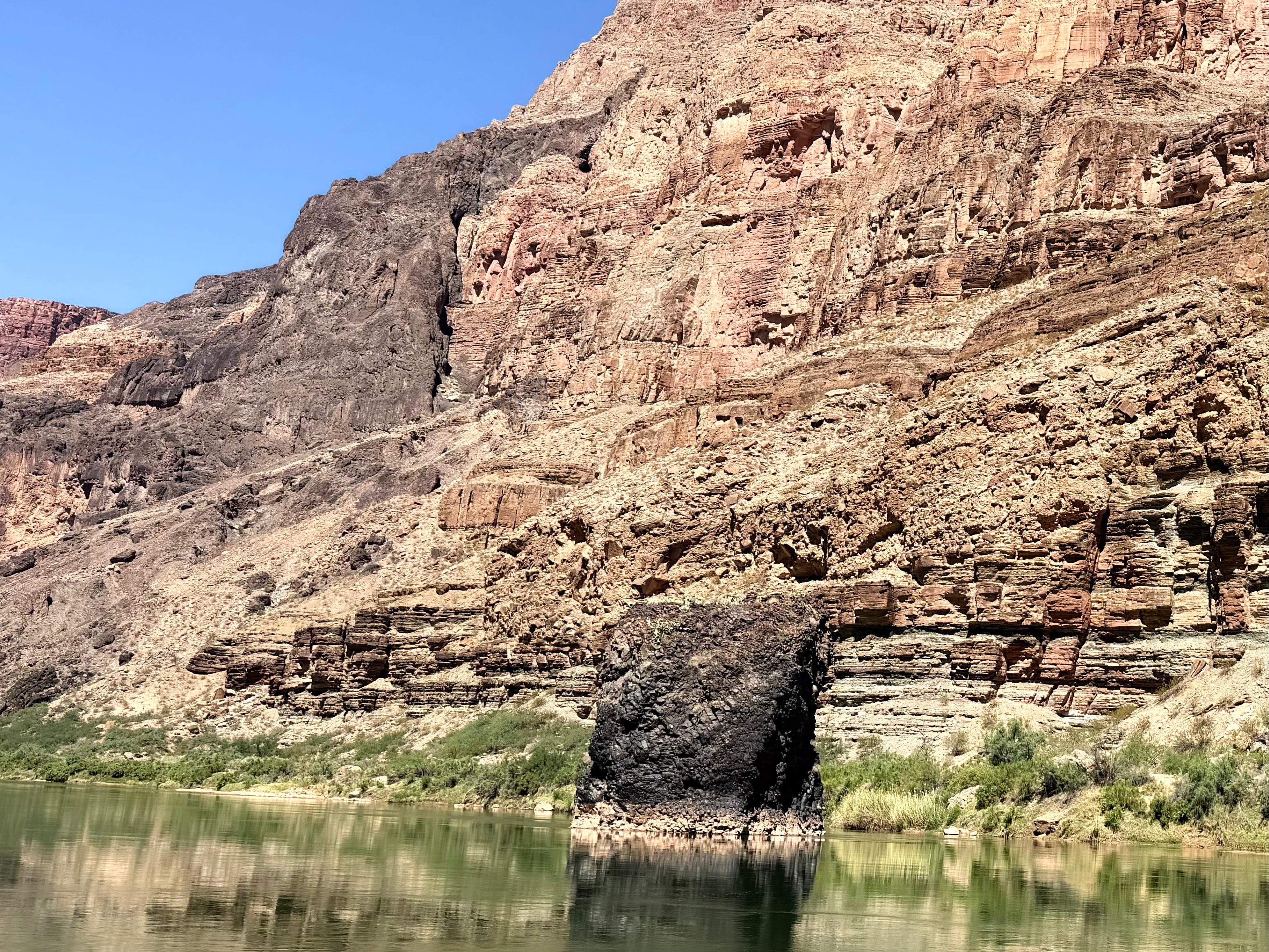
What a conflict of water and fire there must have been here! Just imagine a river of molten rock running down into a river of melted snow. What a seething and boiling of the waters; what clouds of steam rolled into the heavens! —Powell Report, August 25, 1869
2:00 pm - The wind began hindering our progress so much so that despite the most vigorous rowing, we were barely moving. Always the ingenious river guides, the guys did something they had never done before: they tied the three rafts to the S-Rig so that Turner could motor us all. We made great progress and the oarsmen got a much needed break.
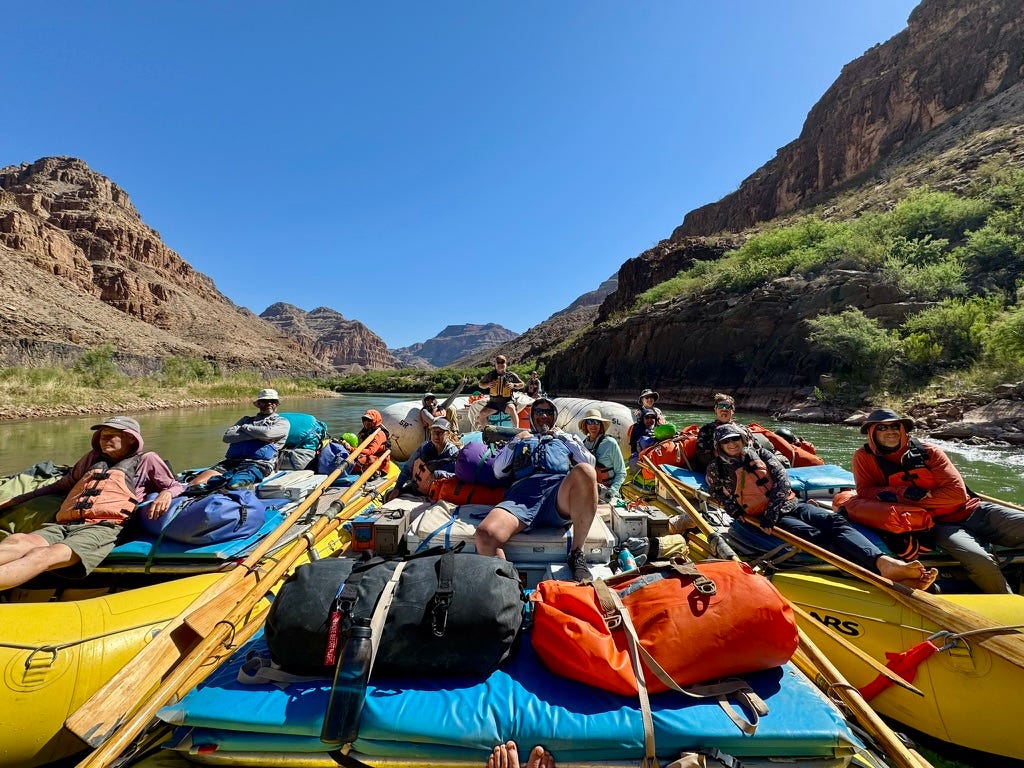
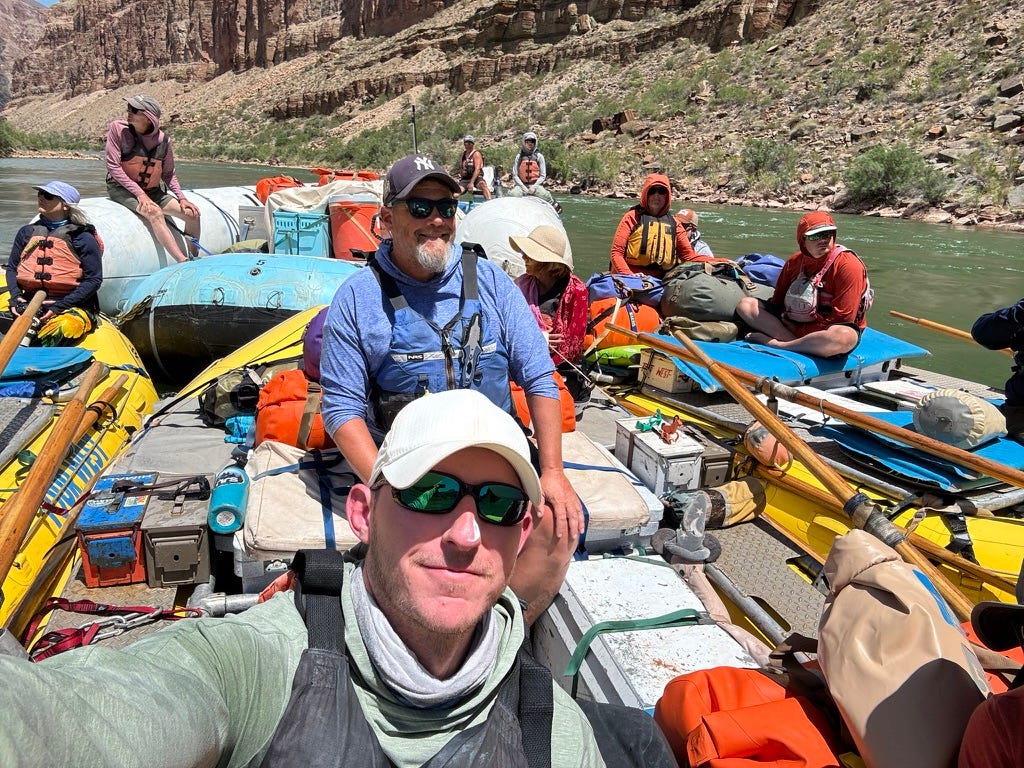
3:00 pm - We pulled into Lower Whitmore camp after some debate to keep going. Dinner was pasta, garlic bread, and Caesar salad with vodka iced tea.
Bugs shared with the group something I have heard before but still find remarkable, especially in the context of where we sat:
If you compressed Earth’s entire 4.54-billion-year history into a single 24-hour day, homo sapiens, which appeared roughly 300,000 years ago, would first appear at about 11:59:54 pm (six seconds before midnight) and the total of recorded human history in the last 0.1 second.
From my journal:
Very hot. 100+ degrees and straight sun. Tried to nap in the afternoon but too hot. Went to sleep in undies only, then got dressed about 1:00 am. Pulled up blanket about 3:00 am. I am ready to sleep in my own bed.
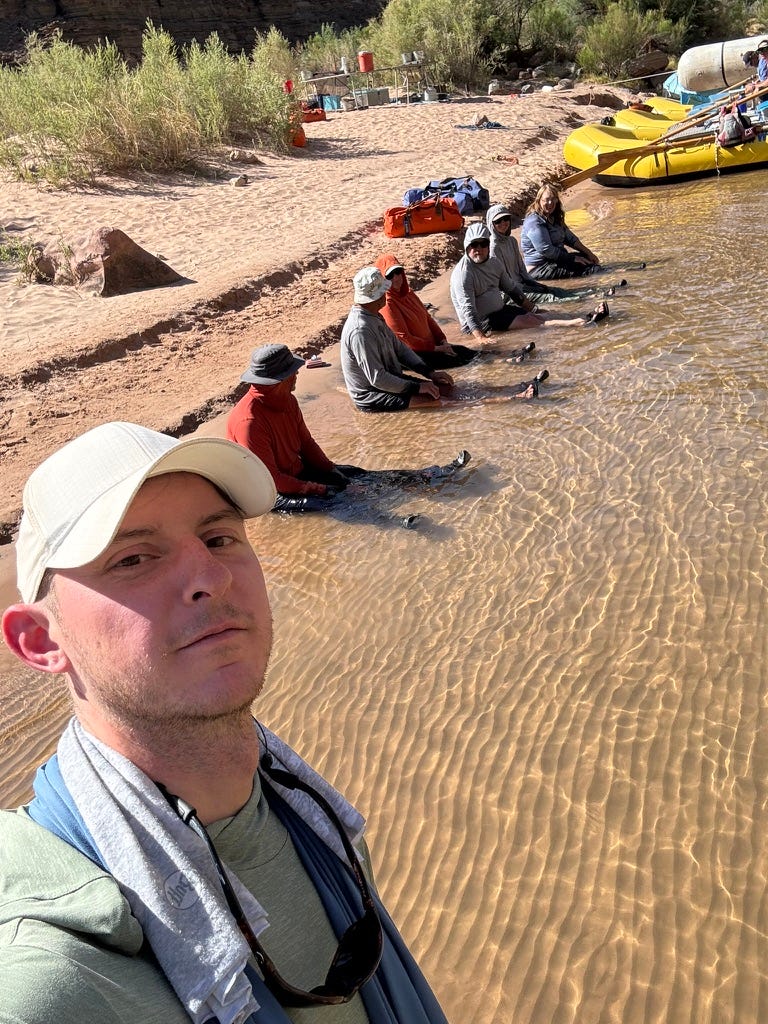
Day 13, Mother’s Day, Lower Whitmore to 222 Mile Canyon, Mile 188-222.
7:20 am - I heard a helicopter take off from the rim. There were several more to follow that morning. We had camped near the Whitmore helipad, where visitors can come and go by air. The noise was obnoxious, and I was grateful that such activity is limited by the National Park Service.
9:00 am - We hiked/climbed up a steep embankment to see ancient pictographs. I still could not wear hiking shoes, but somehow, in my loosely strapped sandals, made it up this…
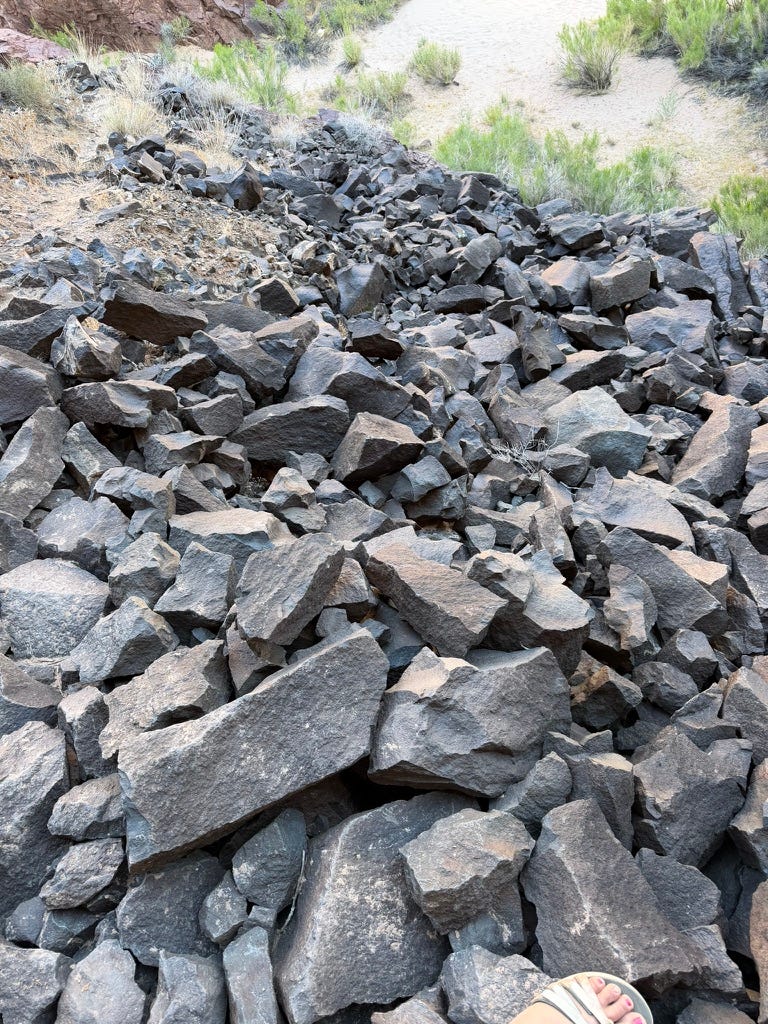
and got to see this…
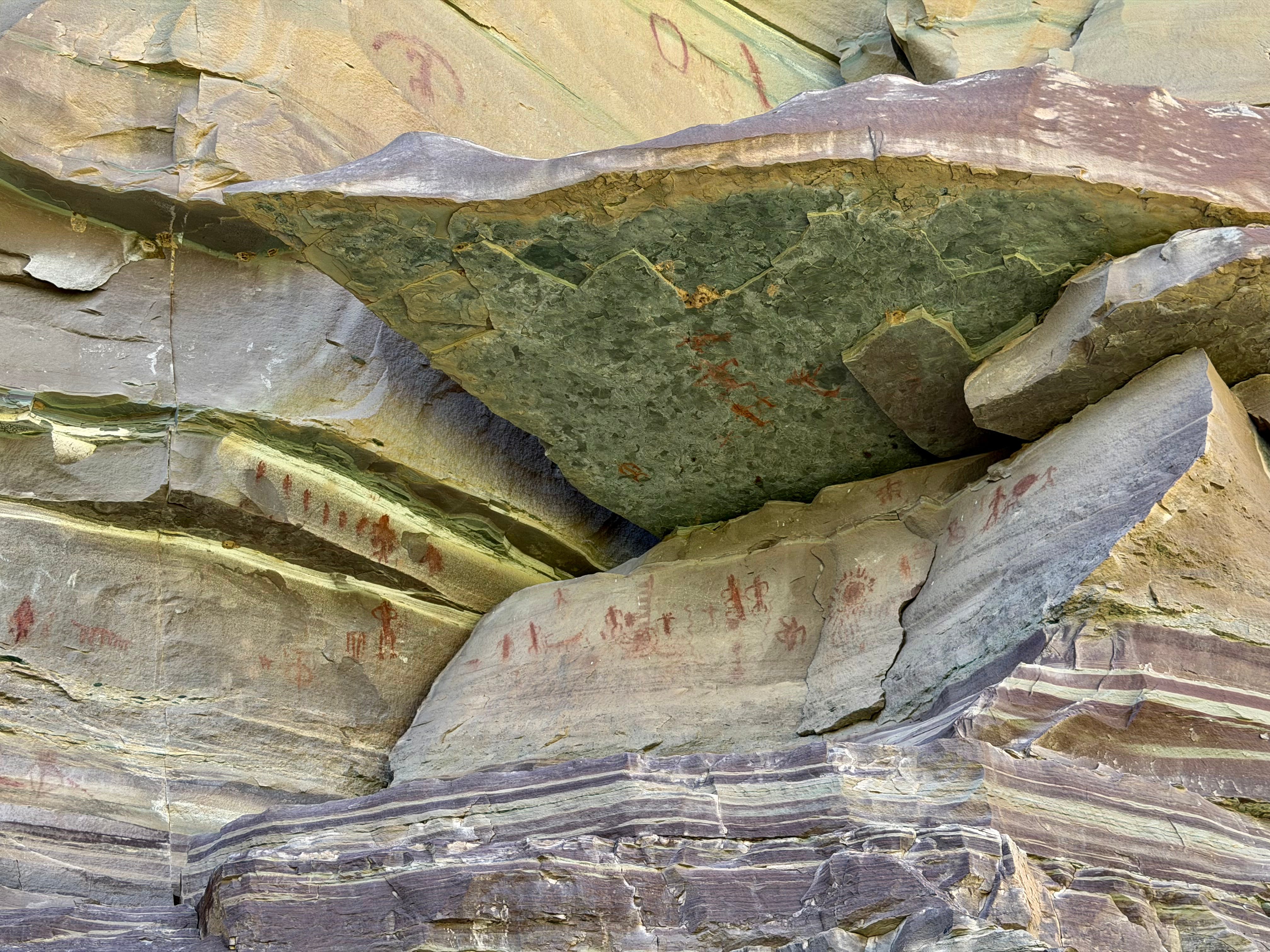
Up the cliff face not far from the river is an amazingly well-preserved collection of figures, mostly painted with red hematite pigment. It provides a detailed ethnographic study of the hunting, camping, farming, gathering, and ceremony of those who lived here.
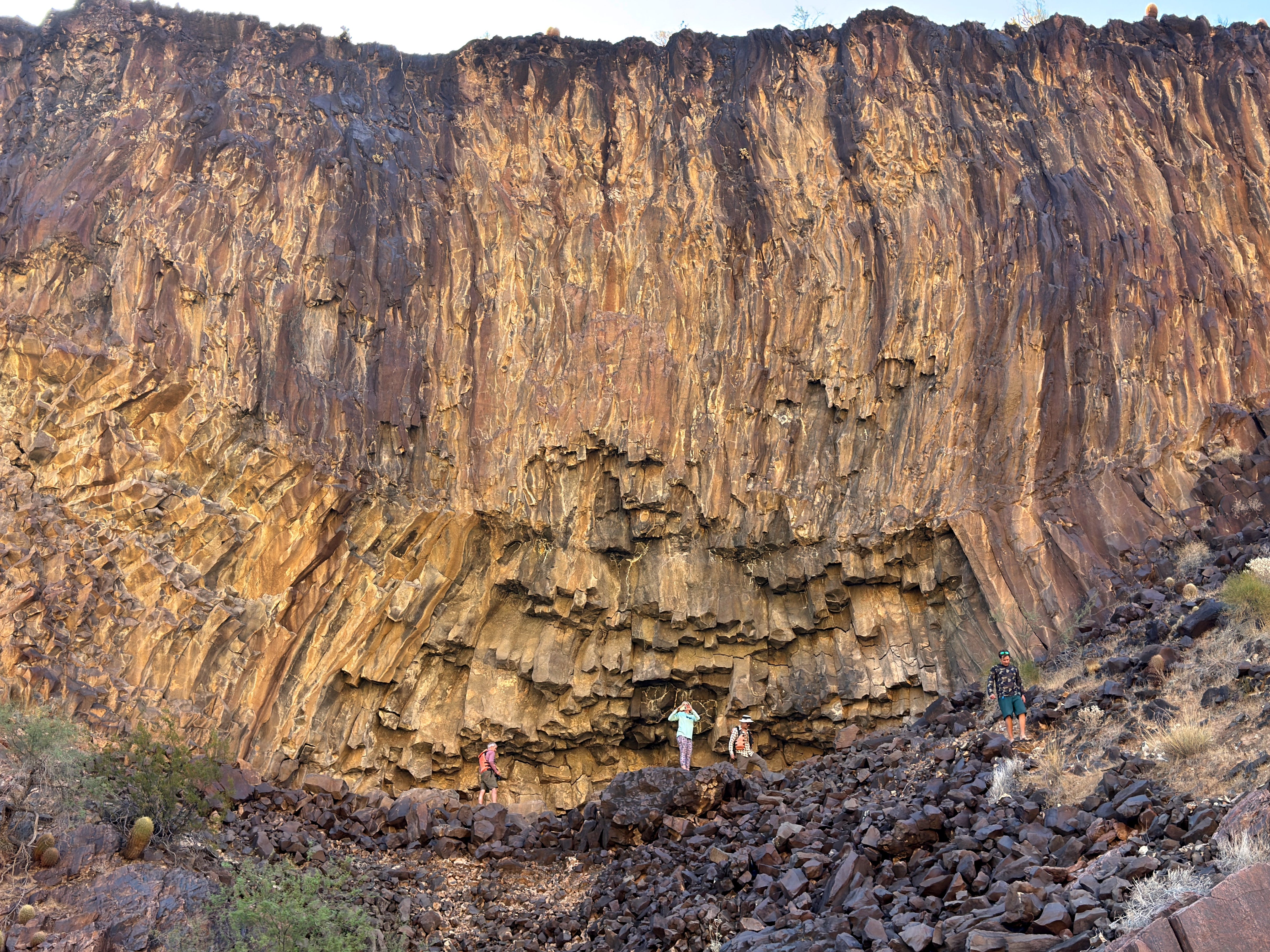
My only other notes from the last day are that the last call for the groover was at 7:45 am, and we didn’t stop for camp until 4:00 pm. Although the heat was oppressive and energy-sapping, I wrote that the day “was lovely and quiet.” We all knew the trip was coming to an end, and although I was battered and bruised, and unable to distinguish if my skin was brown from the sun or the dirt, I was not anxious for it to be over.
Dinner was grilled cheese sandwiches and tomato soup. We went around the circle and took turns talking about our experiences, sharing what we liked best, and what had touched us most.
Day 14, 222 Mile Canyon to Diamond Creek, Mile 222-226
I woke at first light and tried to meditate. I was in a relaxed, contemplative mood. We had a mere four miles to go to the site where our guides would drop us off, but since Diamond Creek is where most everyone takes out, we were told we should get in line early.
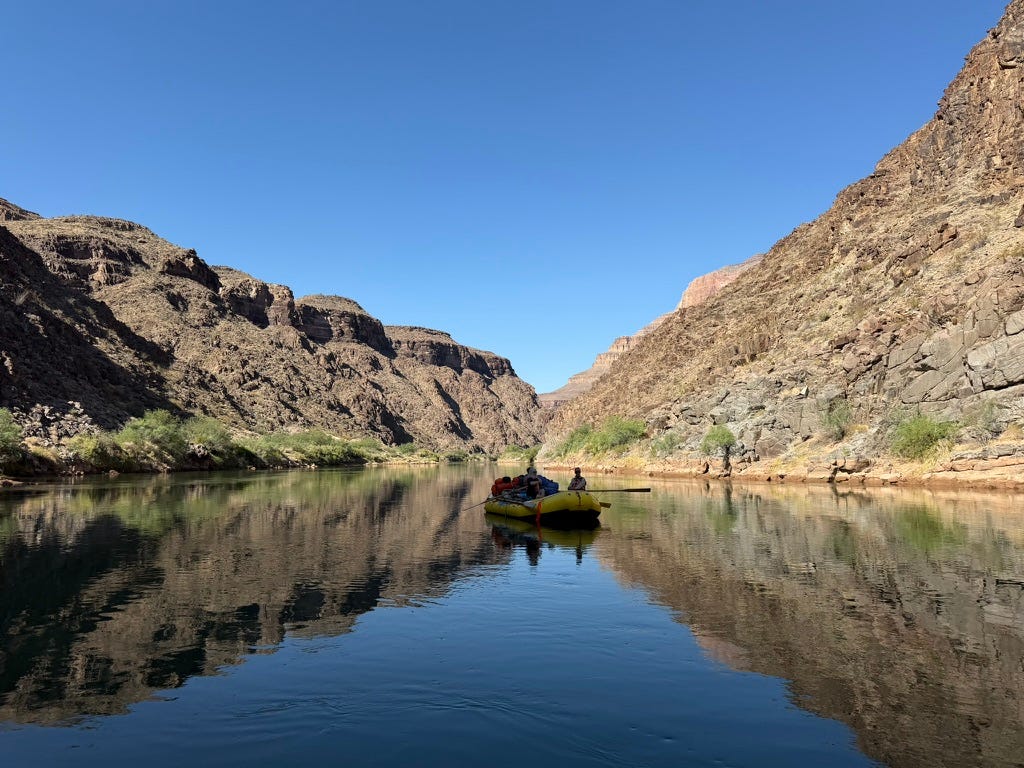
It turned out to be a hurry-up-and-wait kind of day. Suffice it to say, we did what needed to be done—which was a lot and not much fun—to get unloaded from the rafts, repacked into a van and trailer, drive 20-miles on a very rough road (the term “road” is used loosely in this context, unpaved “trail” is more accurate) for about an hour, and then another two hours on the highway back to Flagstaff.
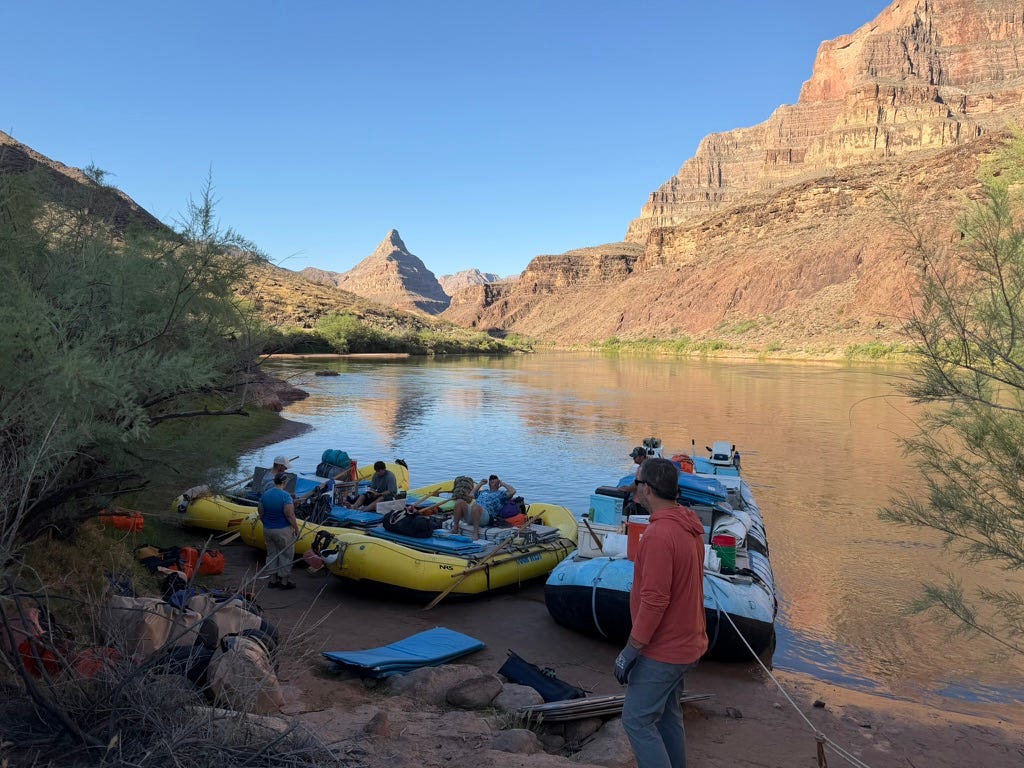
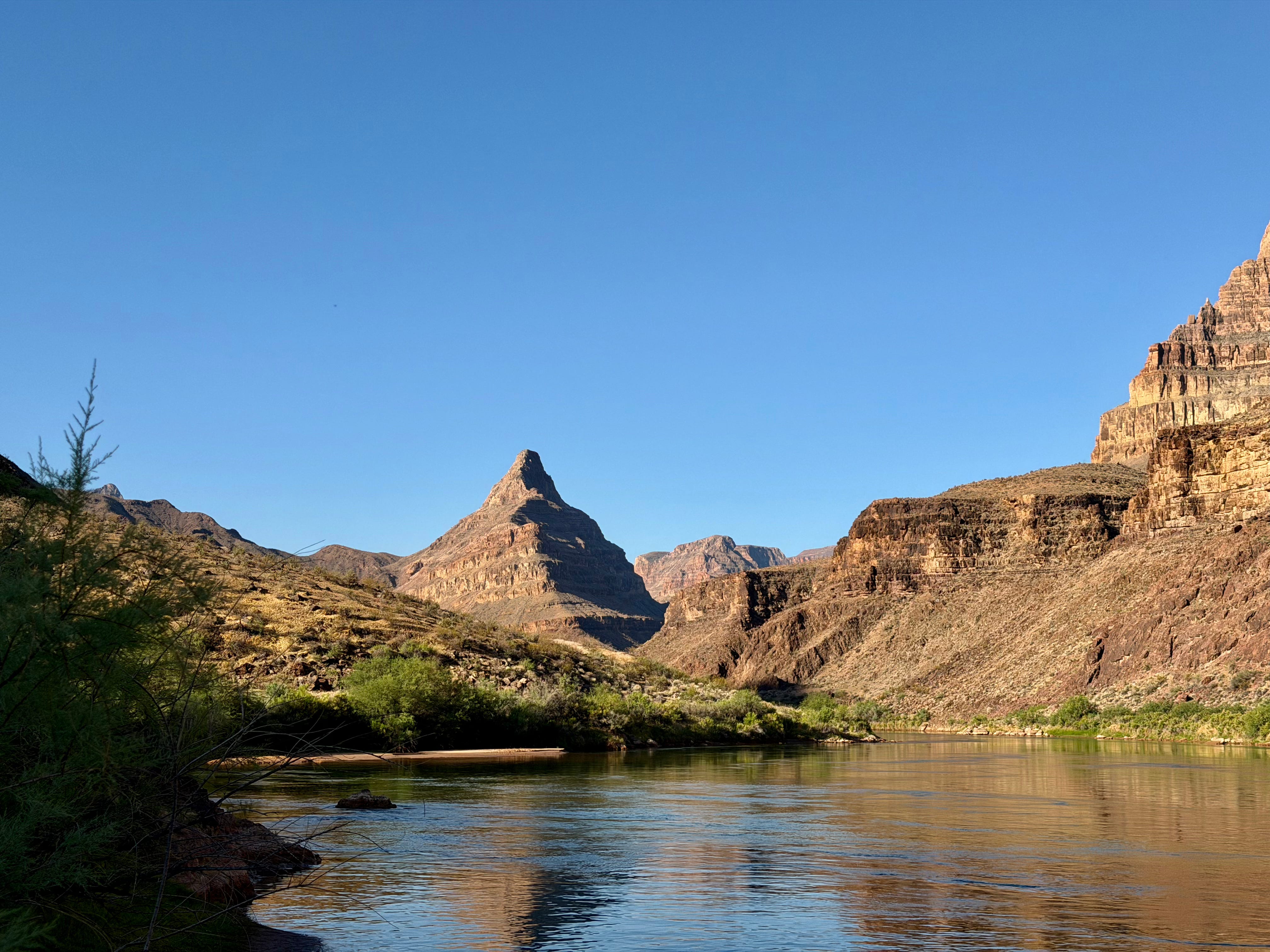
Needless to say, the shower I took at my hotel later that afternoon is a memory to behold in and of itself. There seemed to be no end to the dirt and the sand.
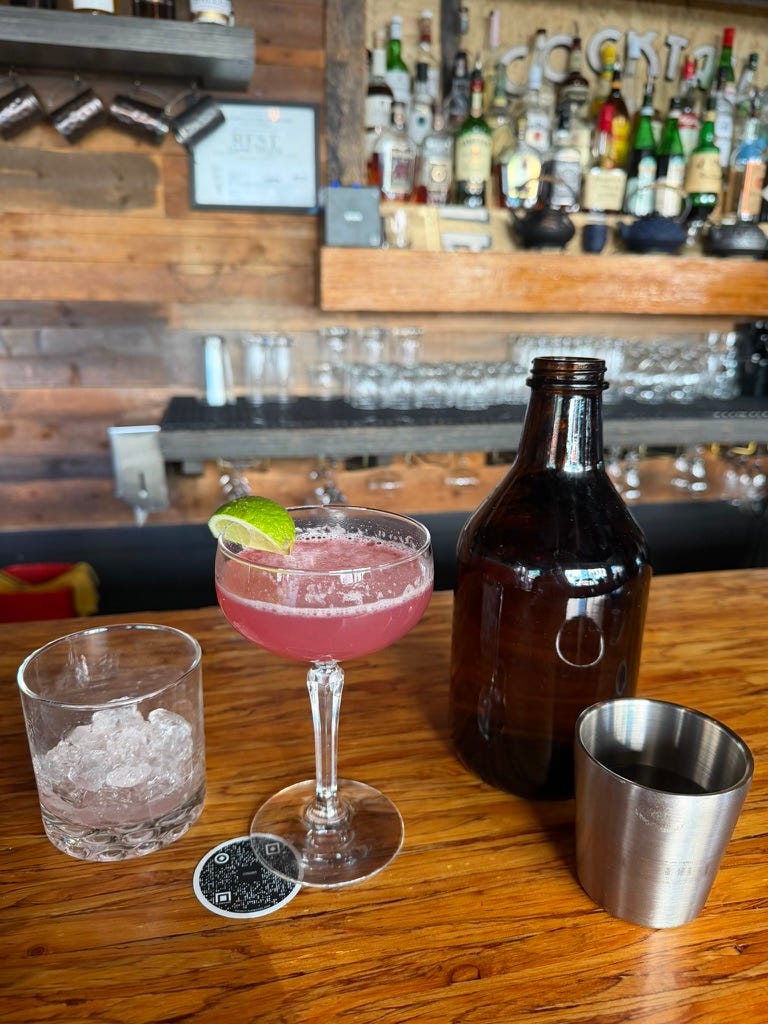
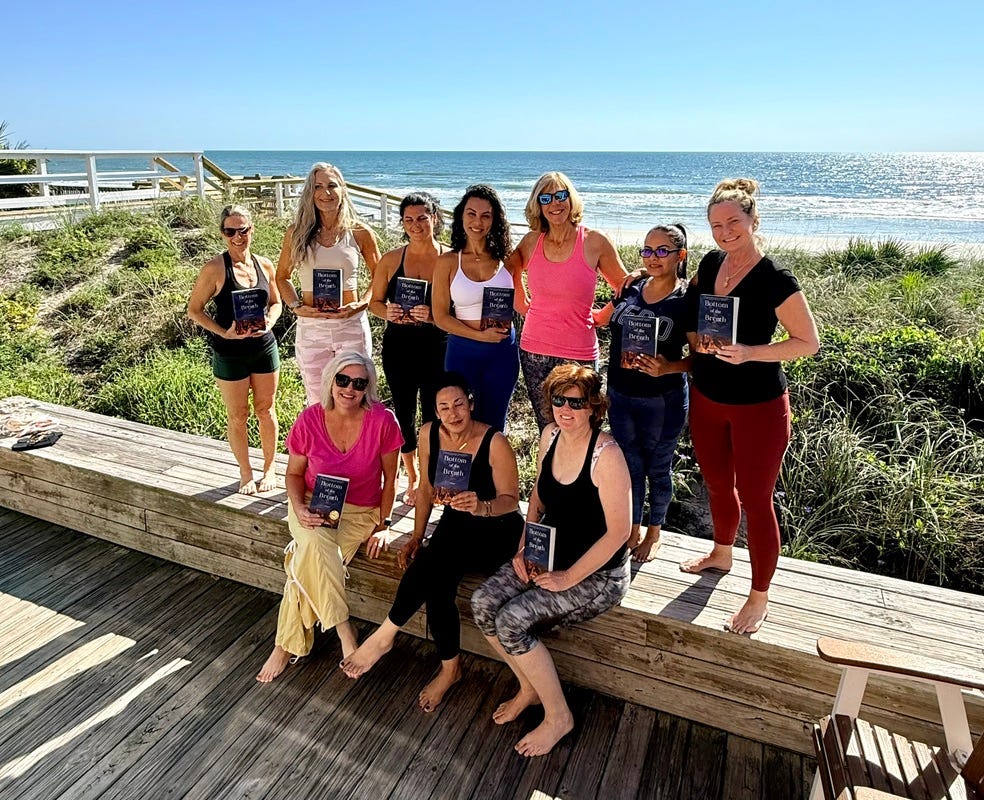
Two days later, I was with a group of friends on retreat at Crescent Beach near St. Augustine, continuing to celebrate the success of my book and no worse for the wear and tear. “Slightly battered, deeply changed,” as my friend Jennifer Grace put it.
Before I left for the trip, I half-joked that my main goal was to stay in the boat. In truth, my goal was to stay out of my head. I wanted to be present. I wanted to just be.
To stay present—to really, truly pay attention, moment by moment by moment—is one of life’s greatest challenges. This is what I tried to do in the canyon.
I know each of my travel companions had a different reason for going on this trip, and each was deeply personal, maybe even subconscious. But I think we all wanted the same thing: to be outside of ourselves for a short while. To step out of, not only the confines of daily life with all its obligations and worries, but out of the person that everyone on top of the rim expects us to be. There is freedom at the bottom of the canyon for sure, but it is a freedom confined and dictated by Mother Nature. Even with all our ego-boosting technological advances, from swift-dry fabrics to fancy communication networks, we are still, in the end, at the mercy of God and Nature. We see that now as much as ever every time we turn on the news.
I wanted to challenge myself with a level of physical discomfort and a different, simpler kind of stress. I was curious to see what my mind would conjure given the gift of hours of silent contemplation surrounded by nature’s nearly incomprehensible beauty and harsh indifference. I did learn things about myself. That goal, too, was accomplished.
Life expects much from us, and we (should) expect much from ourselves. Very few of these expectations and challenges are as uncomplicated and humbling as those on the river. Each day, we either rise to the occasion, or we don’t. We either try to do better than yesterday, or we continue on the same, sorry path. Each morning, we are given a choice.
I’ll close this series with a quote from John Muir, who wrote about the Grand Canyon more eloquently than I can ever hope to:
No matter how far you have wandered hitherto, or how many famous gorges and valleys you have seen, this one, the Grand Canyon of the Colorado, will seem as novel to you, as unearthly in the color and grandeur and quantity of its architecture, as if you had found it after death, on some other star.
Recommended reading
Fiction:
Lillian Boxfish Takes a Walk —Kathleen Rooney
The Correspondent —Virginia Evans
The Tenant of Wildfell Hall —Anne Brontë
The Bridges of Madison County —Robert James Waller, followed by
Slow Waltz in Cedar Bend —Robert James Waller

Non-fiction:
A Swim in a Pond in the Rain —George Saunders
Lafayette in the Somewhat United States —Sarah Vowell

Next up:
Meet Me in Paris —Kristin Harmel (Recommended by my local bookstore, Midnight Moon Books, St. Augustine.)
Thank you, as always, for being here. Remember. . .
Life is short. Read fast.
From one lover of the written word to another,
With love,
Jayne
BOTTOM OF THE BREATH, Winner 2025 Best Book Award, Fiction: Women’s Fiction

BOTTOM OF THE BREATH, Finalist, 20th Annual National Indie Excellence Awards: Women’s Fiction

Coming July 8, 2025! IT’S HERE!! Bottom of the Breath is the story of a woman catapulted from her tranquil life on the Florida panhandle onto a cross-country road trip with her recently estranged husband. She must outrun a hurricane, digest a shocking, decades-old family secret, and come to terms with her own pain-filled past. Laced with mysticism and set among the majesty of Sedona and the Grand Canyon, the novel explores the power of friendship, the importance of forgiveness, and the vital need to create a future that embraces the past.
❤️❤️❤️❤️
What an experience! You are an amazing person! I’m so happy this journey was successful in every way possible. Cheers to the next adventure. Be well my friend 😘😘