
Days 7-8, The Rapids Command Respect.
Mile 75-120, Upper Ratttlesnake to Lower Blacktail

DAY 7 - Upper Rattlesnake to Boucher, Mile 75-97
From my journal:
5:30 am curtain call. Chowwww-eeeeeee!
A gigantic pot of Cream of Wheat awaits us, perfect on this chilly morning. We need to get moving since we have an estimated 25 miles of rapids to conquer today—a boatman’s paradise, I am told. It is windy and overcast now. The stars were enchanting last night, then the wind picked up, and the clouds moved in.
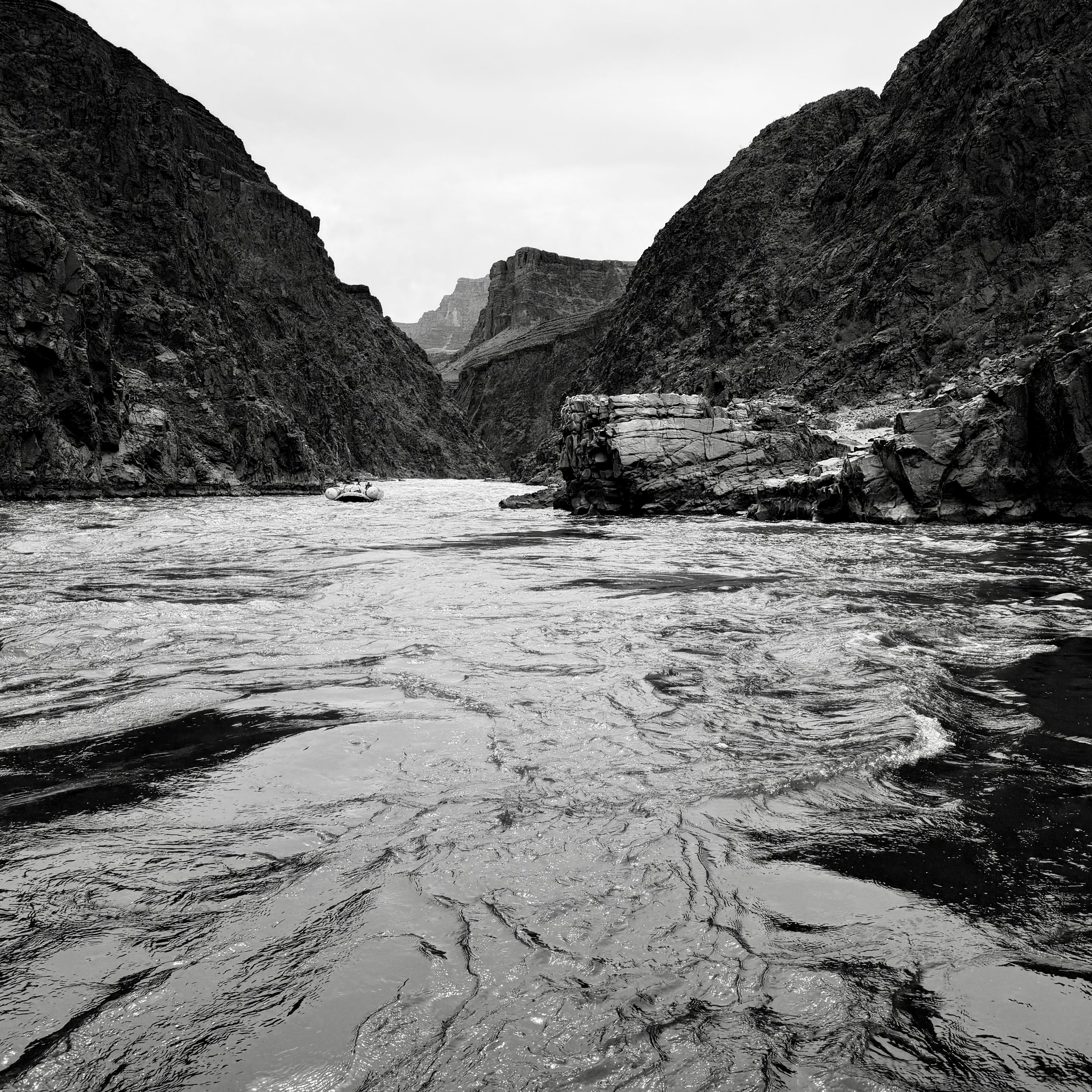
We have entered the Upper Granite Gorge, the first of the three granite gorges we will encounter on this journey, starting at Hance Rapid (Mile 77) and extending further than Diamond Creek, where we will take out a week from now. We are about to experience some of the most iconic whitewater the river has to offer.
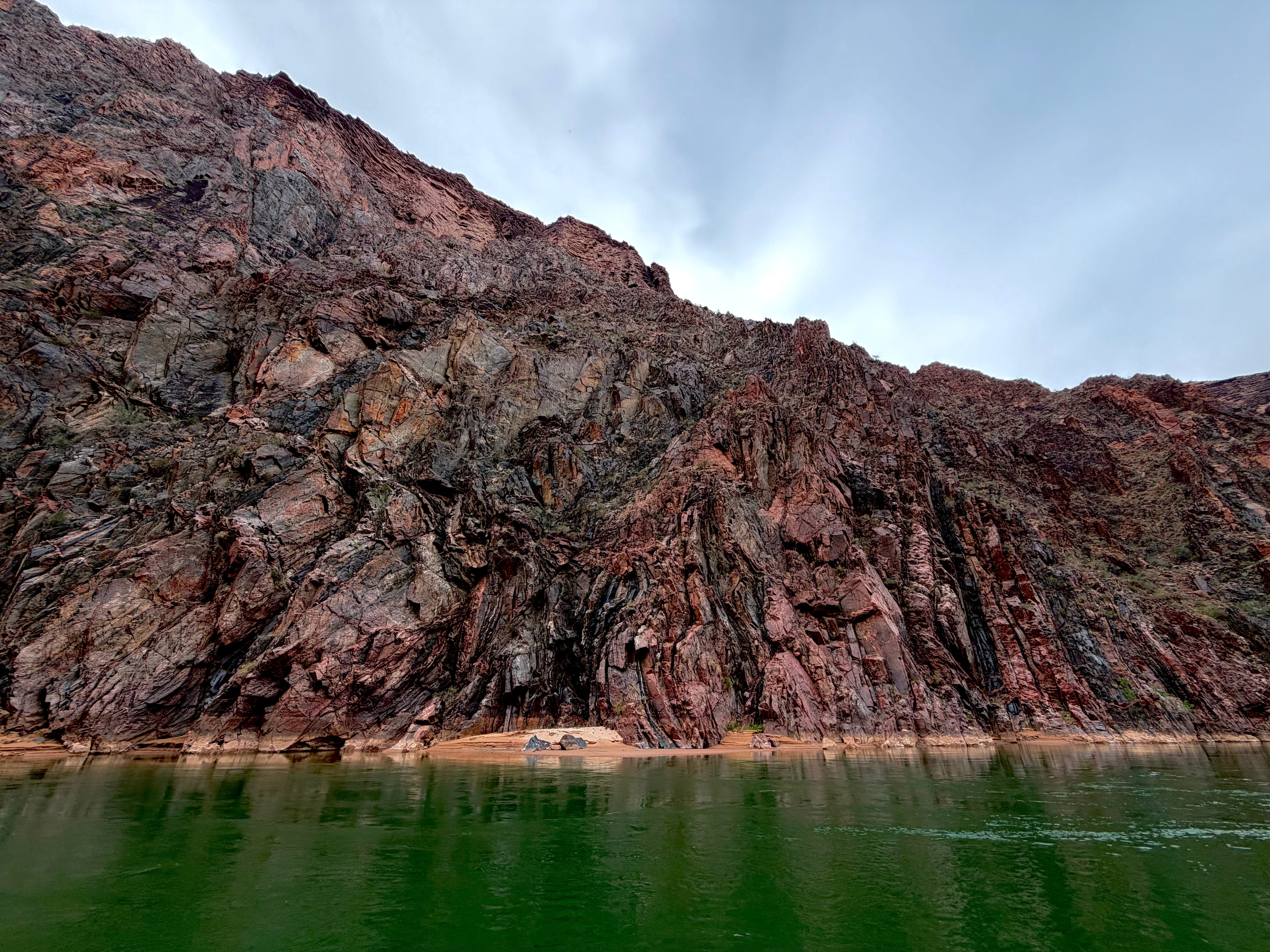
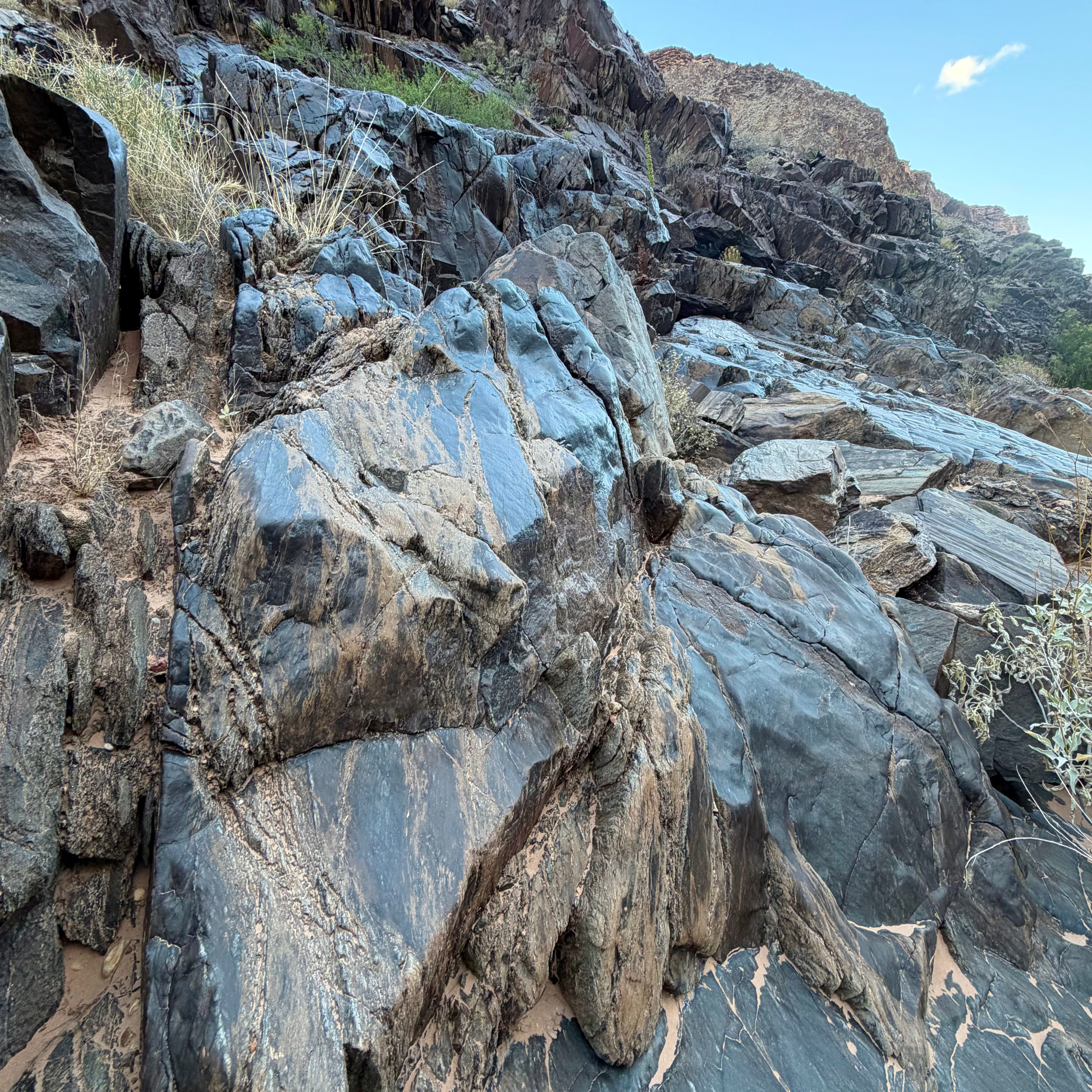
This is the gorge where I met and fell in love with Vishnu Schist and its constant companion, Zoroaster Granite. Schist was formed when sediments and volcanic rock were buried deep underground and subjected to immense heat and pressure. Incredibly, it is the root of an ancient mountain belt in which volcanic island arcs collided with the edge of the growing North American continent 1.75 billion years ago.
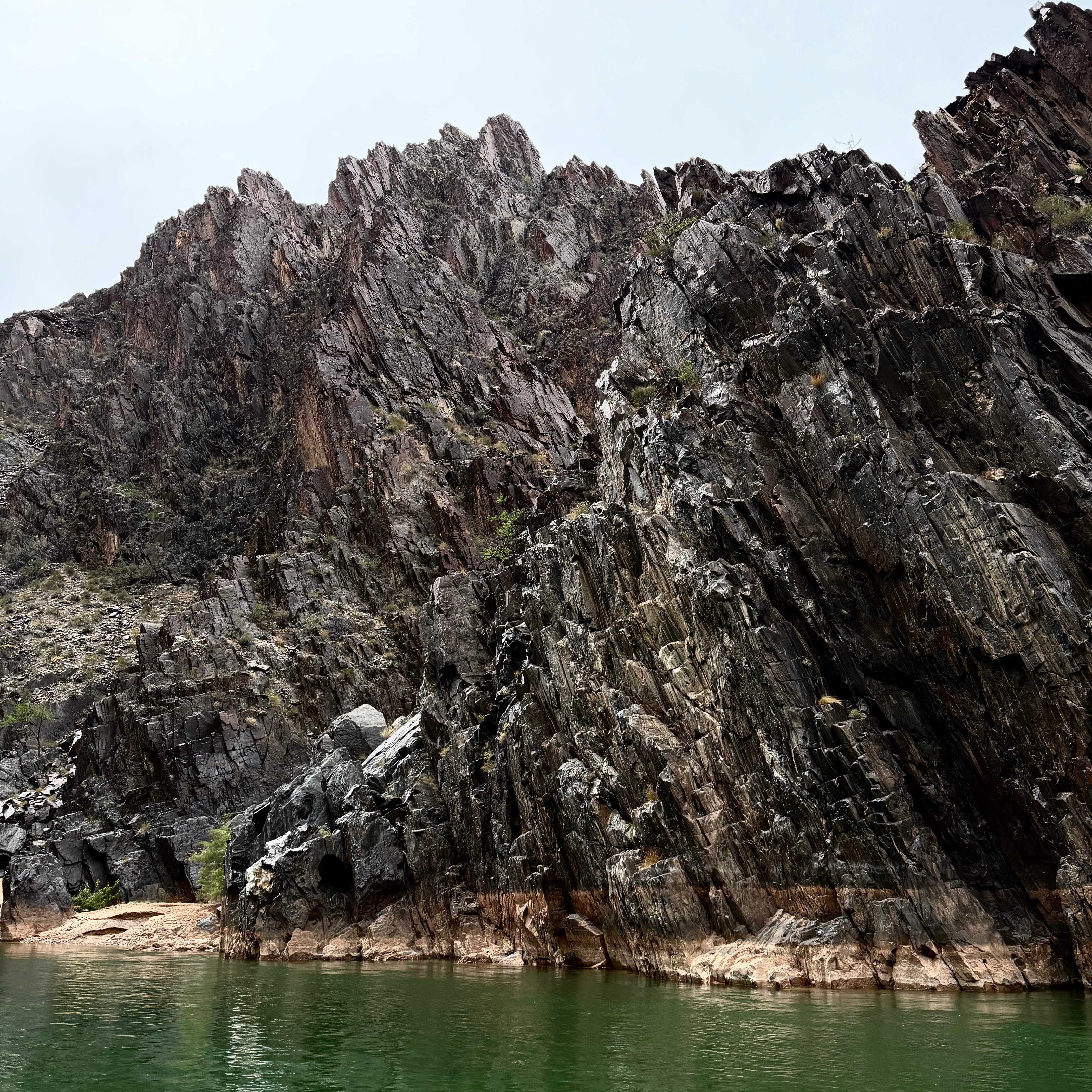
The granite intruded into cracks and weaknesses in the schist while both were deep underground, creating a fluid pattern of endless variation. It seemed as if a thousand faces stared out from the crevices, both human and animal-like, weaving a rich, energetic tapestry depicting a two-billion-year-old story.
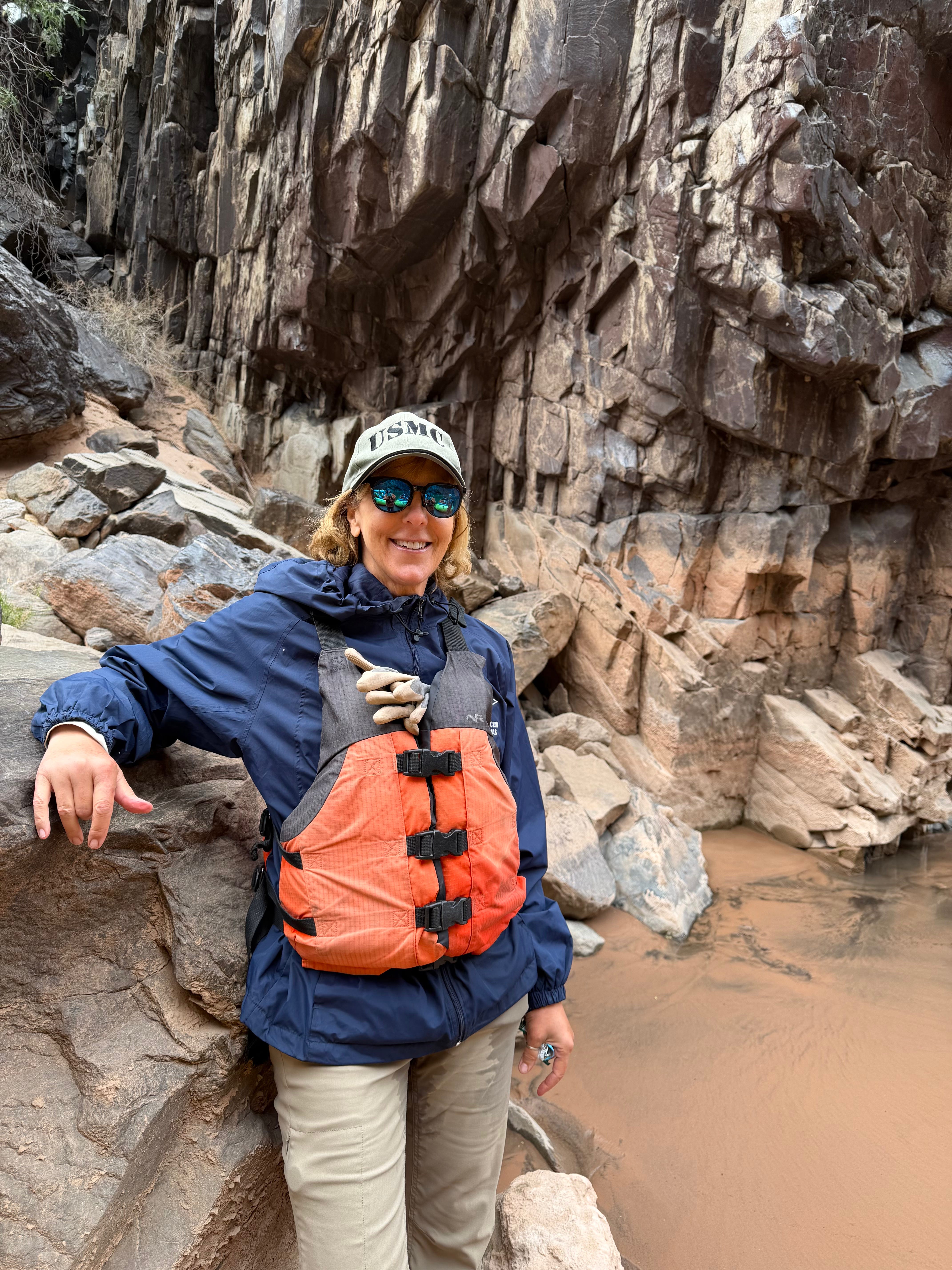
A meditation on Vishnu Schist from my journal:
It is black and tumbled. Some grayish with dust; some solid walls of black sheen so rich they look liquid. This rock is a third the age of Earth itself, compressed over many millions of years, then pushed to the surface by colliding continents. There are smooth, massive sheets and huge boulders that have somehow broken and rolled.
It is found deep in the canyon because it had to be buried for a very long time to allow its beauty to come forth. It is magnificent and rare.
It greeted me early this morning as we rowed into the Great Granite Gorge. It kept me company throughout the day, and watched over me as I slept.
The canyon narrows dramatically in this gorge, and the rapids are larger and closer together. The rapids along the Colorado are rated on a scale of 1-10. For the first time on this trip, the boatmen pulled over and climbed a ridge to assess or “scout” the upcoming rapid. There is a specific plan for tackling each rapid, many of which the guides have memorized. But the river is constantly changing, and it never hurts to take a look before heading down.
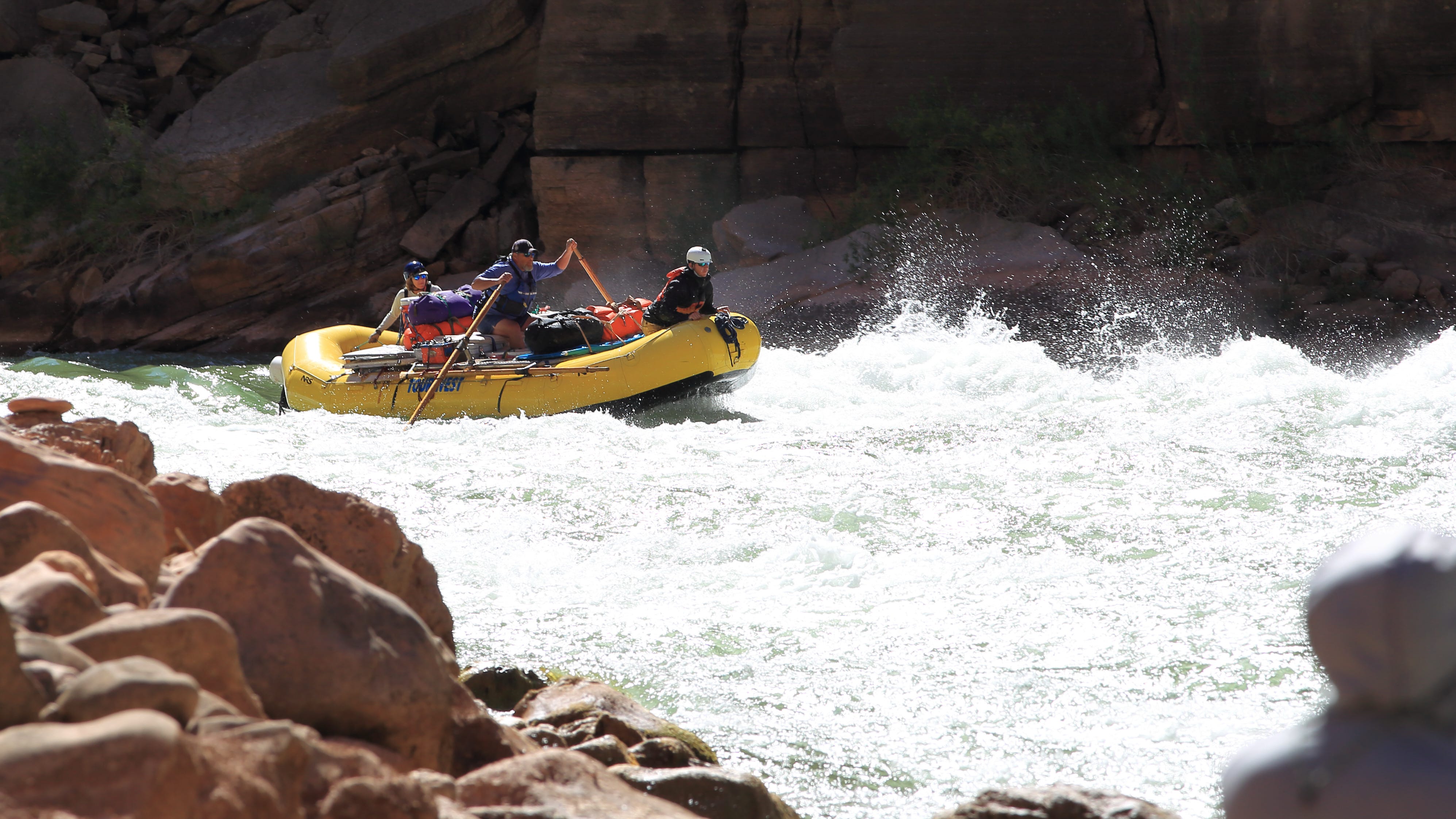
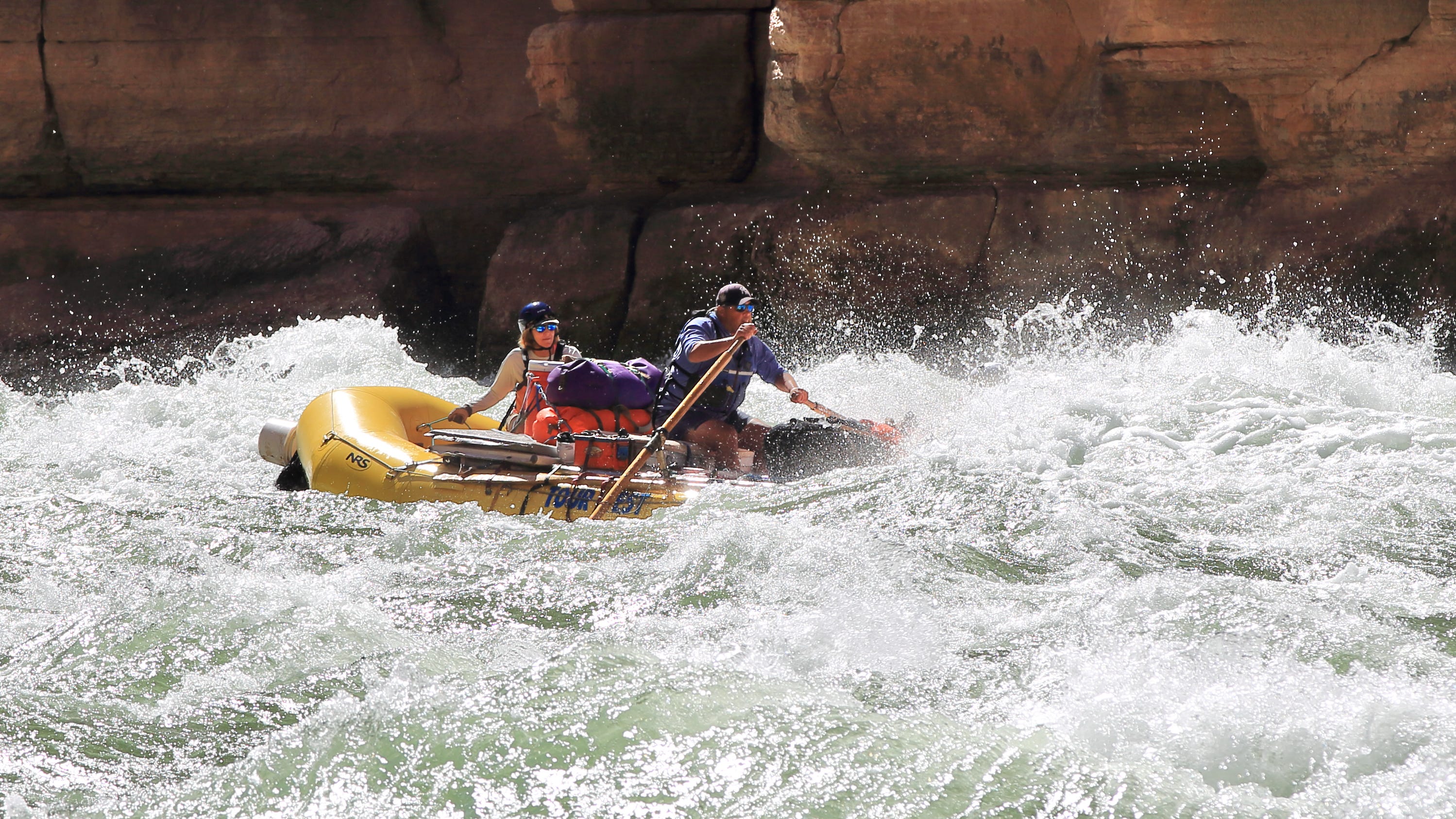
Some rapids are easier to run in a motorboat, and others are easier in a rowboat. We will learn at the conclusion of the trip that Alex, though very experienced on the motorboat, had never before rowed this trip. We would have never known. Kyle and Bugs’ confidence was well-placed; Alex’s performance was flawless.
We passed Boat Beach at Phantom Ranch and Bright Angel Creek (Mile 88). These places hold a special place in my heart because this is where Cyd, my protagonist, and her fellow hikers spent the night in my novel. I had never been this far down on the trail, so I had to research this section of the canyon for the book rather than rely on my experience. I wrote it, now I was living it!
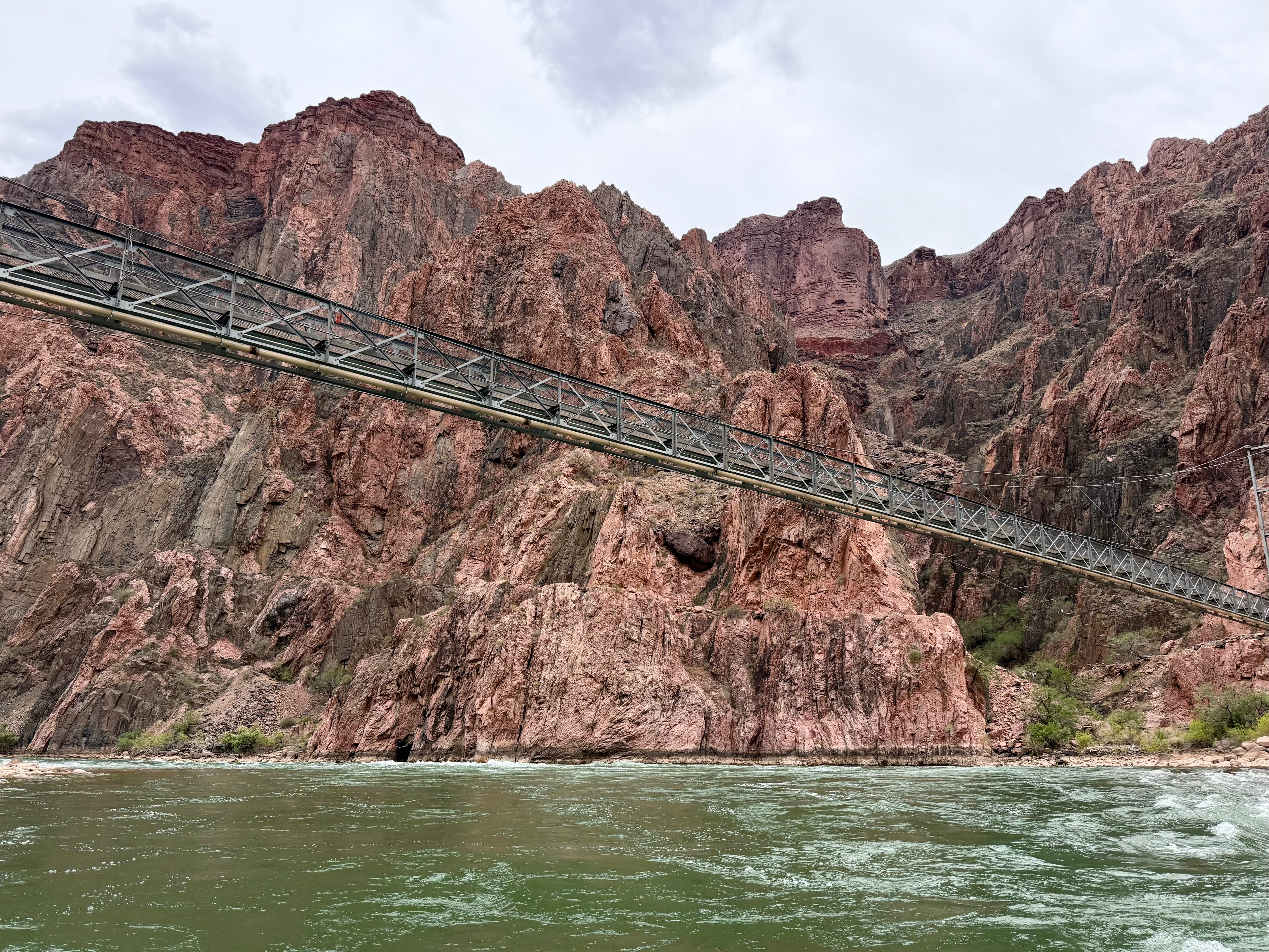
Sadly, we could not take the short walk to Phantom Ranch due to construction on the water system, but I was thrilled to see Bright Angel Creek trickling into the river. From here, you can pick up the Kaibab Trail and enjoy the seven-mile hike up to the North Rim.
At Mile 94, just past Granite Rapid (rated 8-9 with a 19’ drop. “Wet!” I wrote in my journal), we noticed Turner and Amanda had stalled out in the motorboat. The smaller rafts usually ran ahead of the motorboat in case we needed assistance. In this case, the tables were turned.
We waited, not knowing what was happening. After a few minutes, Alex parked his raft and walked back upriver where Turner had managed to maneuver the S-rig onto a portion of beach. Turner and Alex swapped out one of the engines, and we continued on our way.
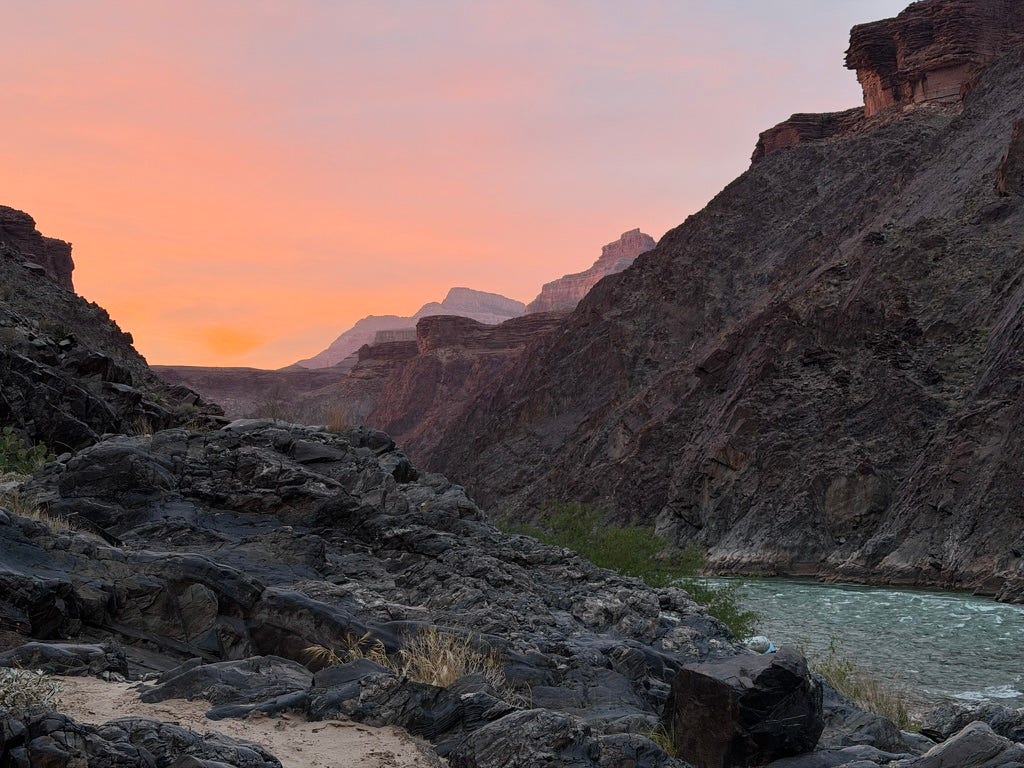
We were exhilarated and tired by the time we made camp in the early afternoon at the tail end of Boucher Rapids. The boatmen continued to amaze us with their stamina and expertise. I counted 16 official rapids plus a few more that are too new to be on my map.
From my journal:
It was a long day on the water with only a short lunch break. It was overcast and would have been perfectly pleasant if not for being wet for hours from frequent very cold drenchings. At least my head and upper body stayed relatively dry, which is not the same for those in front. They took many direct hits. I bathed this evening behind a rock wall. It refreshed me even though the sand was right back. Very windy.
Day 8 - Boucher to Lower Blacktail, Mile 97-120
This day was a turning point in our adventure. Day 7 got our attention: there are serious rapids in this canyon. Day 8 would hammer the point home:
There are serious rapids in this canyon, and you are a long way from help.
Notes from my journal:
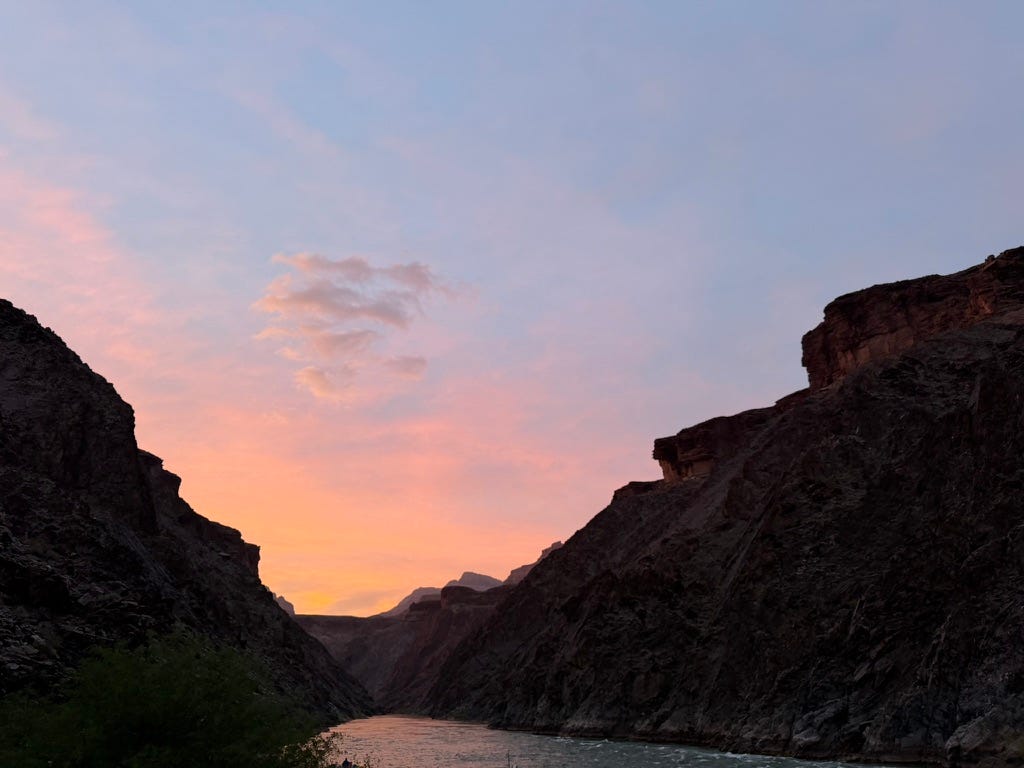
Wakeup call at 5:30. Slept in tent most of the night due to strong winds and so much blowing sand. It calmed down around 1:00 am and I moved out of the tent and onto my cot in time to witness a spectacular moon coming out from behind a wall of schist.
This would be another day on the rapids train. Early that morning, we passed a point where I noted in my journal: In 1966, it rained 24” in 24 hours. Boulders came down two creeks on both sides of the river and turned what was then Crystal Ripple into ten rapids.
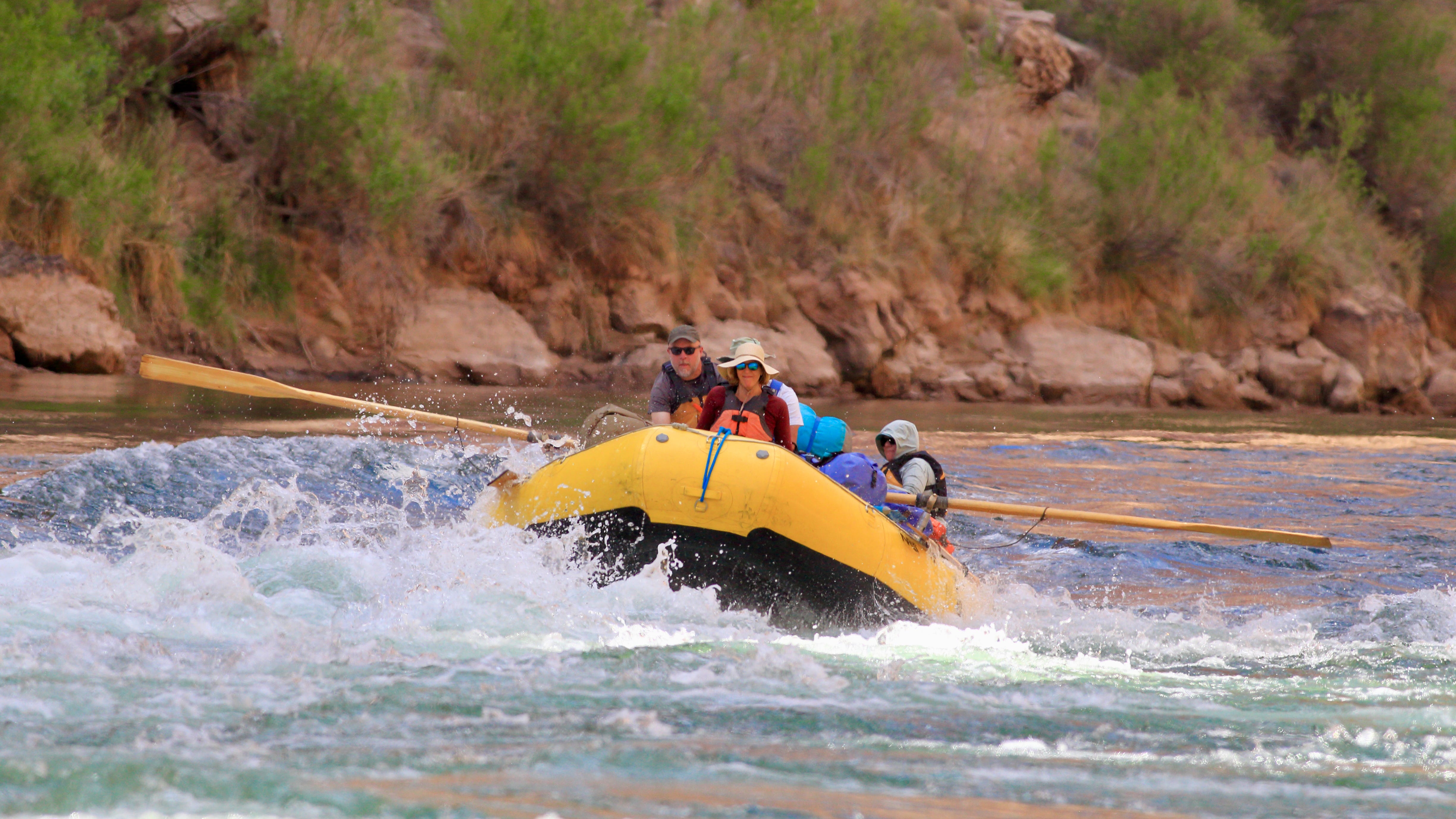
A little research confirms that what was described as a 1000-year flood did indeed turn a ripple into the formidable Crystal Rapid (Mile 99), but it occured over a period of 3-4 days and did not actually create ten rapids but a rapid rated 10 with a 17’ drop. (I was trying to listen to Kyle’s stories and write in between soakings.)
The area below Crystal Rapid is lovingly referred to by river runners as ABC: Alive Below Crystal.
After Crystal, we enter a series of rapids known as The Gems: Agate, Sapphire, Turquoise, Emerald, and Ruby. These rapids come in quick succession, about a mile apart, which meant about every 15 minutes we were bracing for a bronco ride.
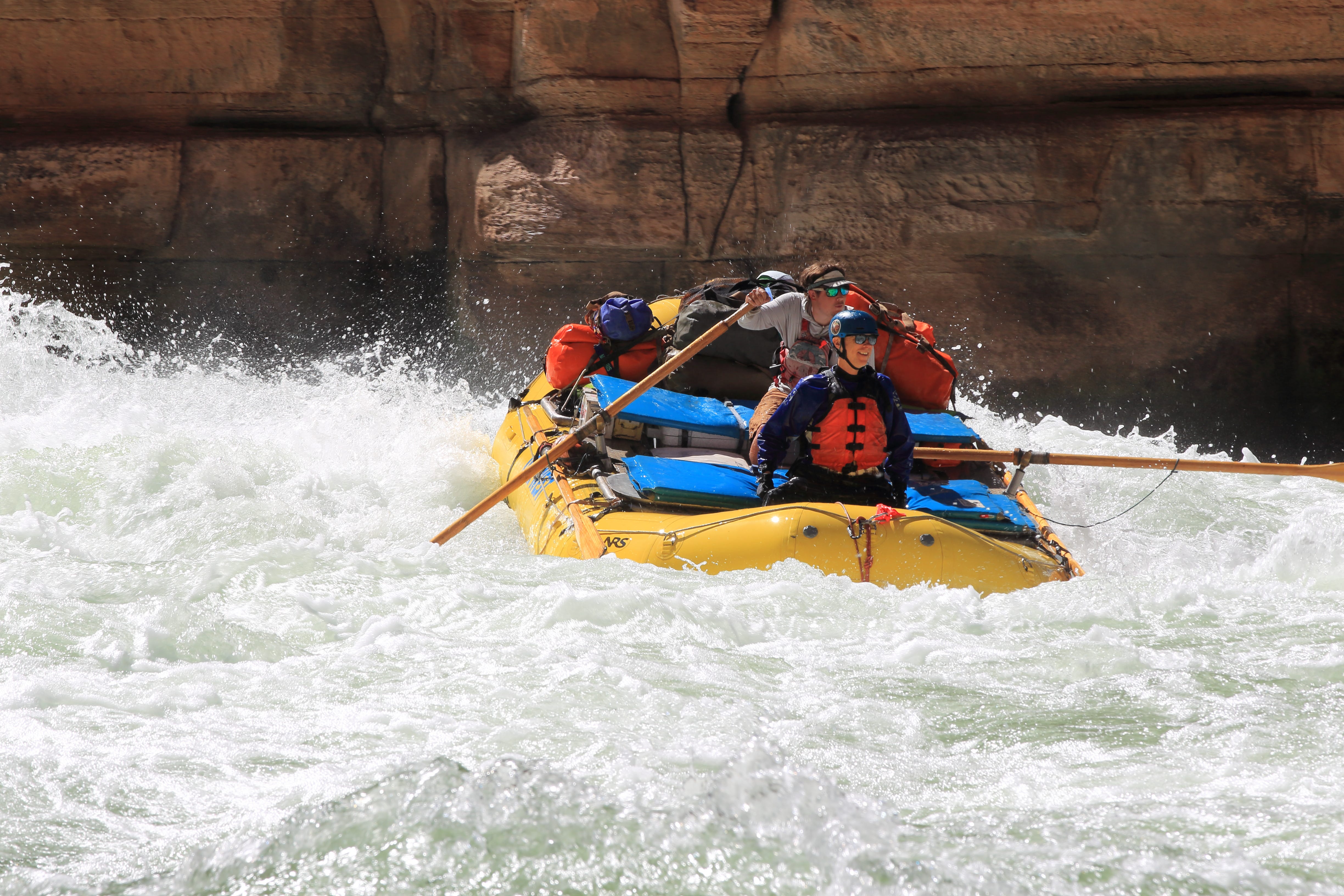
If you’ve never run rapids in a small raft, I’ll attempt to describe it for you:
You are sitting on the rounded, slippery-when-wet edge of a rubber raft. There are bags piled in front of you (which obstruct your view) or behind you (which crowd you), depending on your location in the boat and how the boatman configures things. Everything on the boat is meant to be tied securely, but things can and do move and therefore you must be careful what you choose to hang on to.
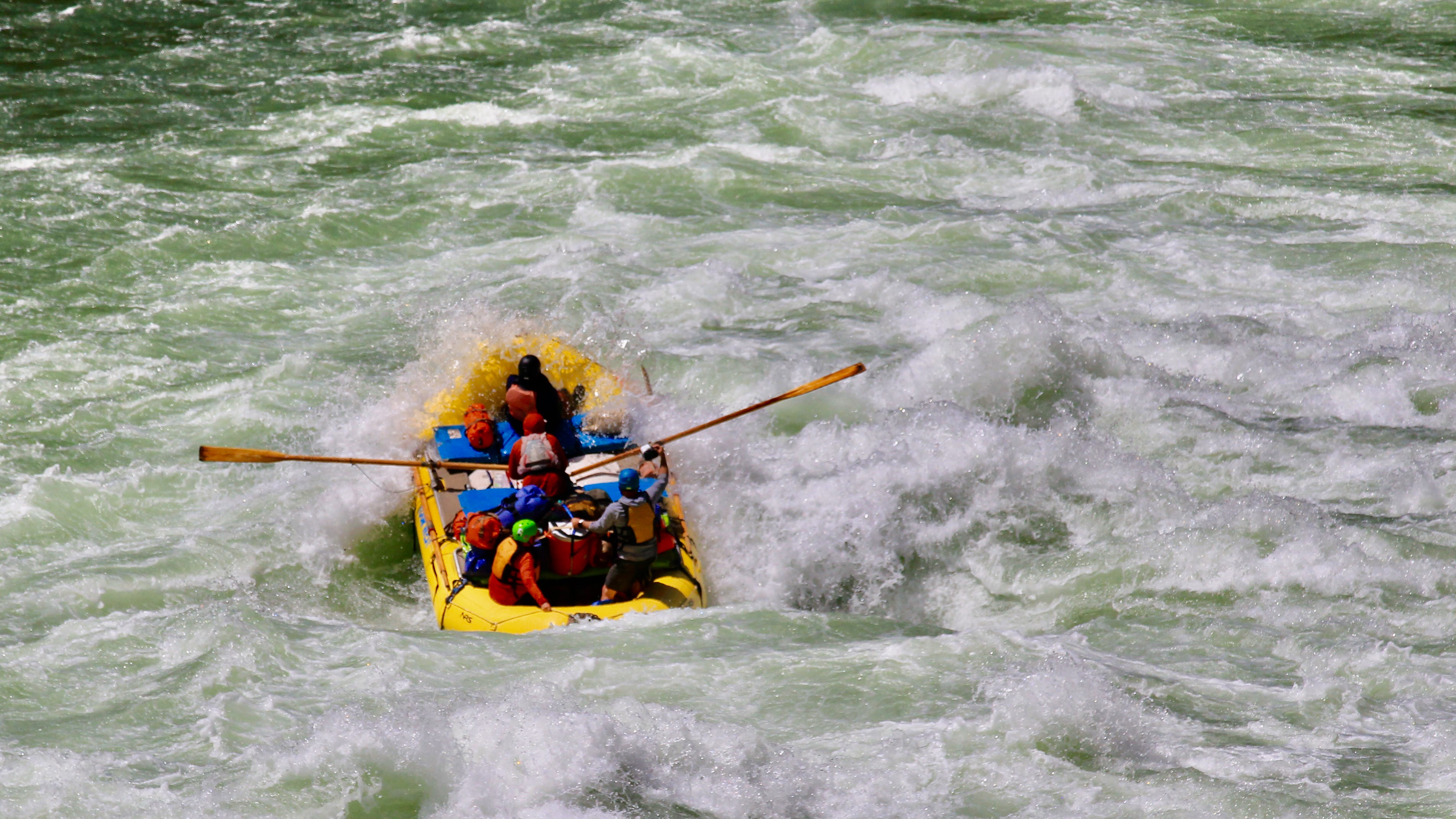
There is an aluminum cage that forms a square seating area for the boatman. This, of course, is hard and can come in contact with your head if you are thrown violently forward or backward, which, on occasion, you are.
There are heavy wooden oars—the ones the boatman is using, as well as an extra pair which are secured to the side of the boat and which, too, can and did come loose—and other hard objects in the vicinity of your body, including the boulders just outside the boat.
A rapid can appear deceptively unimpressive upon first approach, but this is because you can’t really see what you’re dealing with until you get into the thick of it, which is when, obviously, it is too late to turn back.
As soon as the bow takes its initial dip, you are thrust into a roiling caldron of chaos. To be clear, it is not chaos to an experienced river runner. What I saw as water rushing at us from every direction at once, throwing us forward, then jerking us back, giant boulder after giant boulder threatening to crush us, only to be narrowly avoided at the last second, is seen by the boatmen as a manageable maze. Each obstacle of the rapid is either visible to our guides or known from past runs. This is where their experience shines.
River runner terms:
Holes: Churning water downstream from a submerged rock
Tongues: V-shaped smooth water ahead of a rapid
Sleepers: Smooth “pillows” of water hiding shallow rocks
Eddys: Sections where water runs upstream behind an obstacle
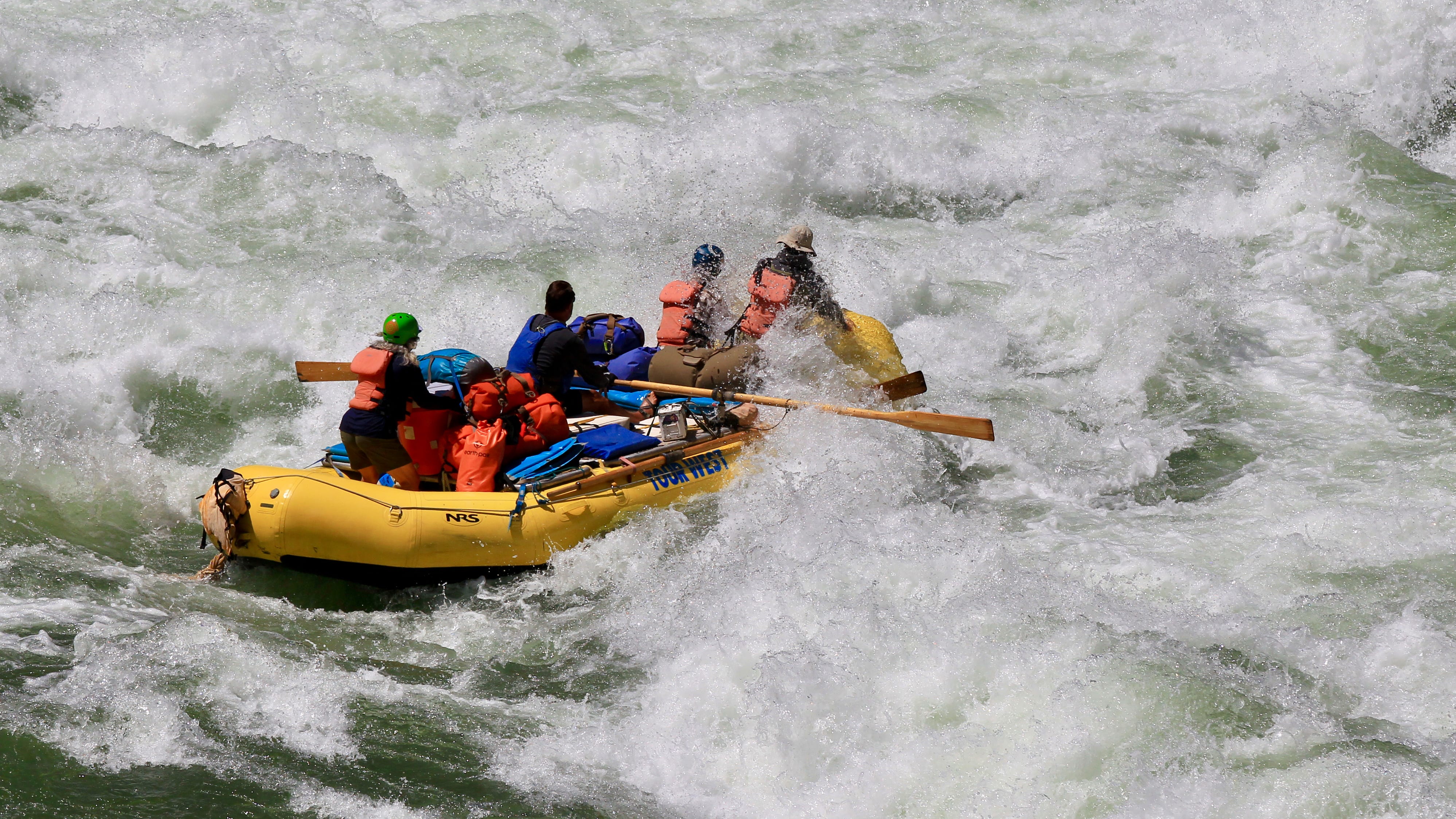
After lunch, we were meant to stop at Elves Chasm (Mile 116) which is described as “a lush, fern-draped waterfall and grotto oasis”. So many boats were already there when we arrived, we were forced to continue on. Even with the regulations that limit the number of boats and people on the river, you still run into “crowds”. There is simply not enough usable space for us to pull our boats. Part of the changes brought by the dam is the loss of miles of sandy beaches along the river’s edge.
For millions of years, the Colorado River carried enormous quantities of sand, silt, and mud eroded from the Rocky Mountains and the Colorado Plateau and swept in by spring snowmelt. When floodwaters slowed around bends or at tributary mouths, broad beaches and sandbars were created.
When Glen Canyon Dam was built most of the river’s sediment became trapped in Lake Powell. The annual spring floods that once rebuilt the beaches virtually disappeared, and as a result, long stretches of broad, soft sand became smaller, rockier, or disappeared altogether.
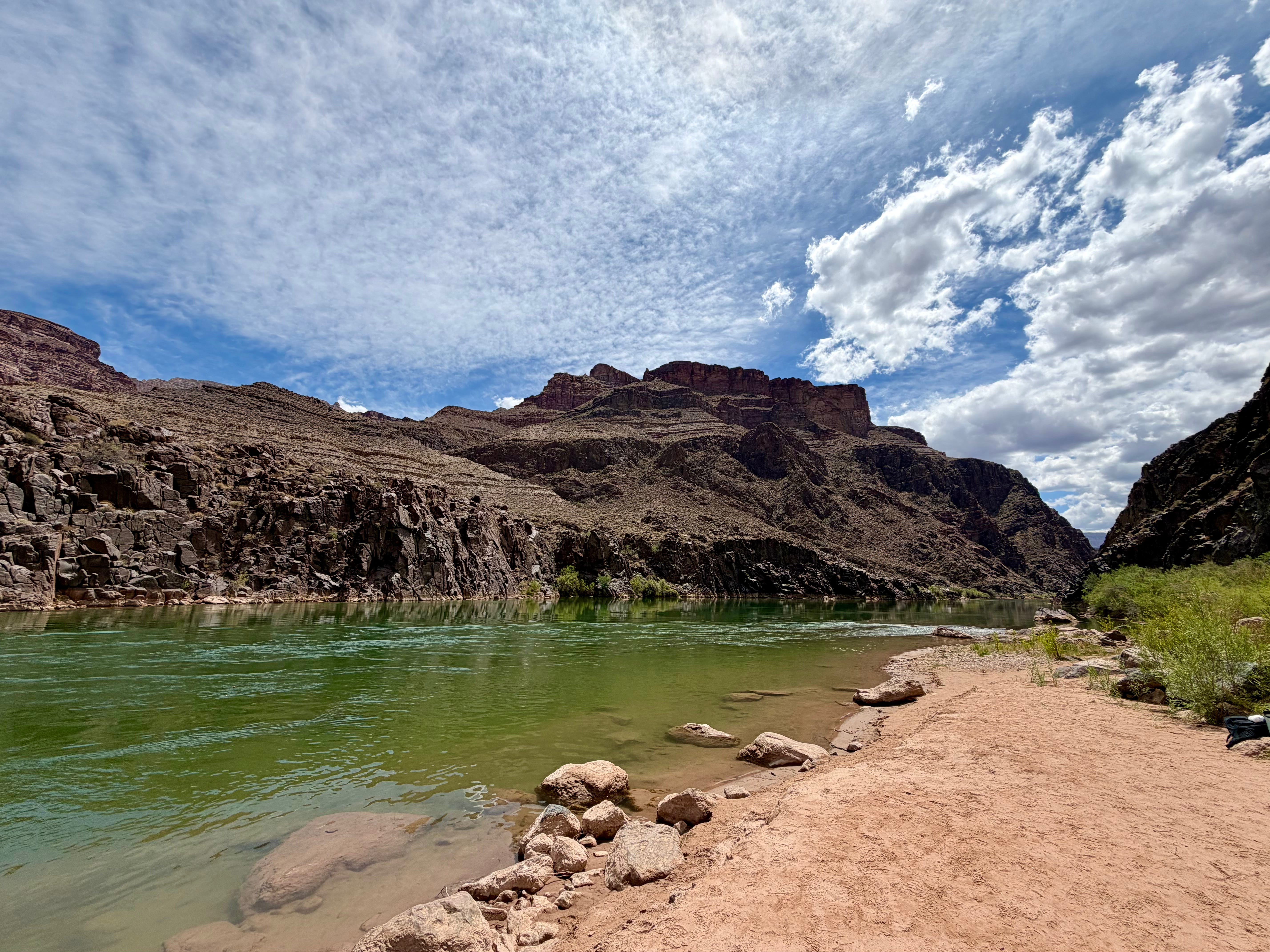
That afternoon, we faced a series of the most challenging rapids we had yet encountered.
During one run, we hit a big curl, and I was thrown forward and to the right, but I managed to keep hold of the ropes. My boatmate in back, Nancy, was not so lucky. “I’m out! I’m out!” I heard her screams, then realized she was no longer in the boat.
I’m still not sure how she was able to hang on in the turbulent waters, but she clung to the side of the boat as we continued through the rapid. Our instructions were: If you fall out of the boat, stay calm, signal that you're okay, and watch for the guide’s instructions.
In an instant, our boatman, Turner, had dropped the oars and was at the side of the boat. He spoke calmly and clearly, checking that she was all right, telling her he was going to get her back in the boat.
This was easier said than done. We were still in rough water, and she was difficult to reach near the back side of the boat. The two men in front, unsure what to do and very aware of more rapids only seconds ahead of us, waited for instructions from Turner. Seeing the desperate situation, I let go of my grip and grabbed onto one, then both of Nancy’s legs. Together, Turner and I were able to hoist her back over the side and into the raft, Turner holding onto her life vest and me onto her legs.
To her credit, Nancy remained in good spirits, and weathered the remaining rapids like a champ. I was shaken by the experience, well aware that it could easily have been me.
When we finally got to camp, Nancy could barely get off the boat. Her leg was badly bruised and swollen. She would be forced to ride in the motorboat for the next three days due to pain and limited mobility.
I would later learn that one of the guys was almost thrown out of his boat, too. “I was airborne,” he said. “If I hadn’t had a firm hold, I would have gone over.” And, on yet another rapid, the two riders in back were thrown forward—one into and over the framing and the other headfirst into the hard cooler.
All is a day’s work.
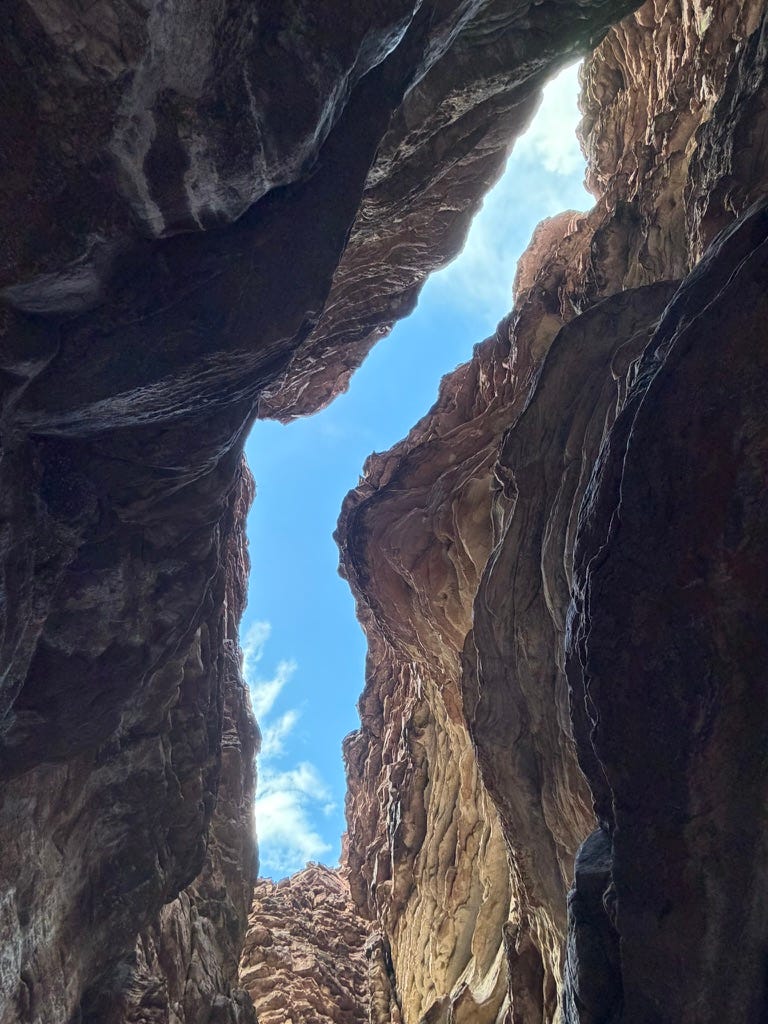
Our reward was a beautiful afternoon in the mystical Blacktail Canyon, just a short walk from camp, where I was able to touch the Great Unconformity, shown in my previous post.
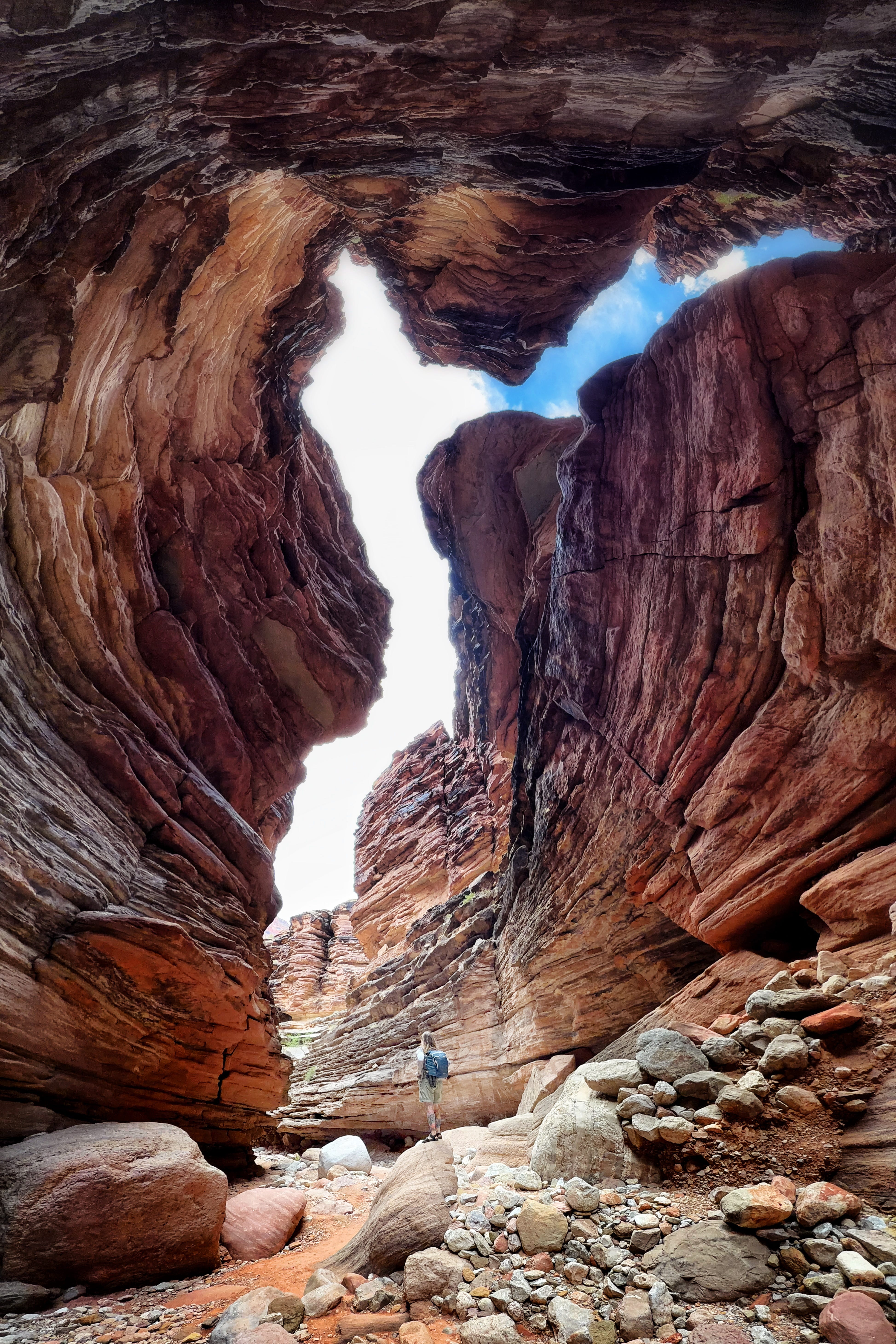
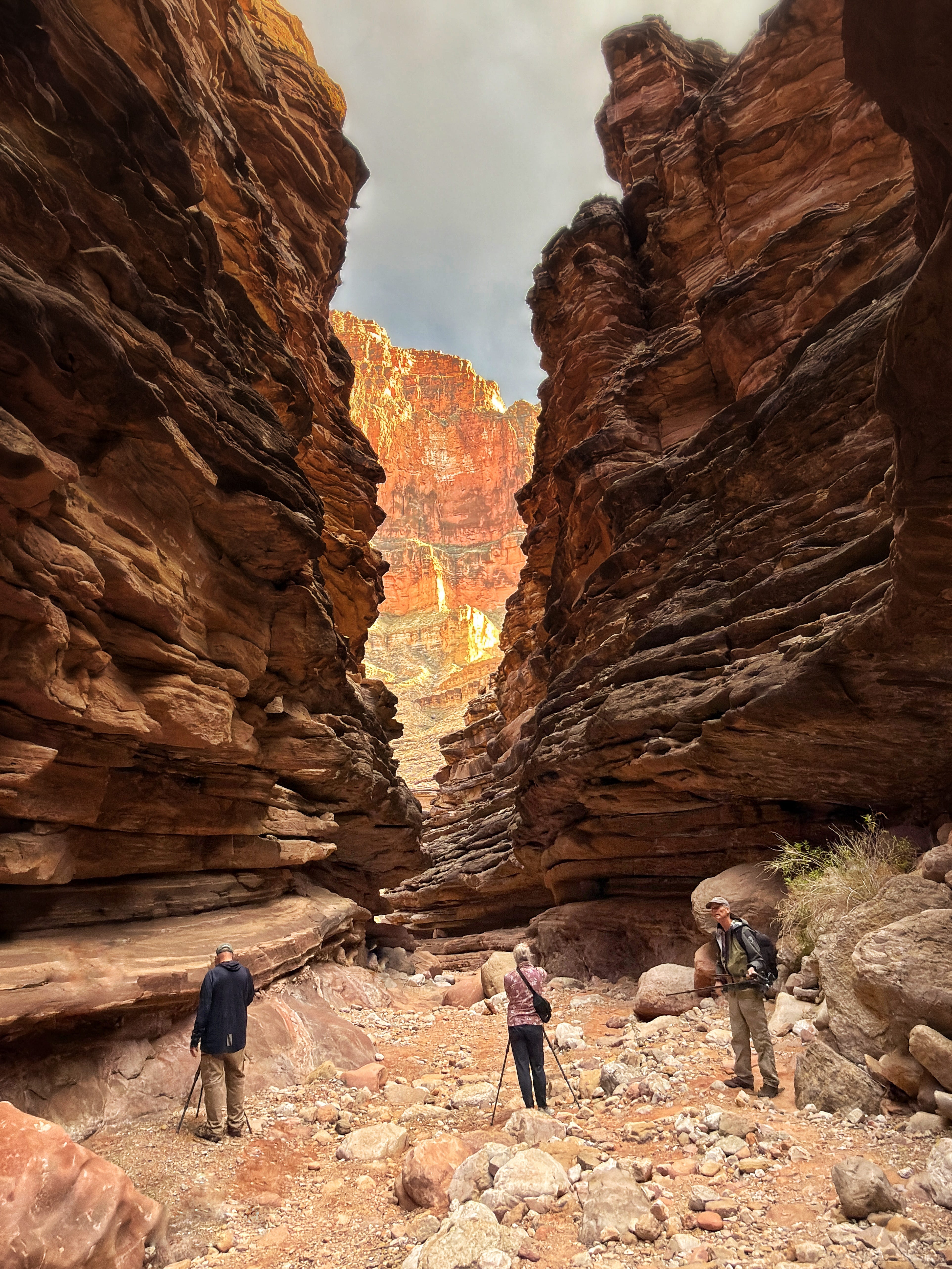
We ended the day sharing stories and a bit of tequila. As we made our way to our campsites with the wind blowing and the clouds thickening above us, Bruce suggested I keep all my stuff in dry bags overnight and sleep in my rain gear “just in case.”
I set up a tent and took an Aleve PM. Lights out at 10:00. It never did rain.
Next up: Day 9 and Bedrock (aka Dreadrock) Rapid
Thank you, as always, for being here. Remember. . .
Life is short. Read fast.
From one lover of the written word to another,
With love,
Jayne
BOTTOM OF THE BREATH, Winner 2025 Best Book Award, Fiction: Women’s Fiction

BOTTOM OF THE BREATH, Finalist, 20th Annual National Indie Excellence Awards: Women’s Fiction

Coming July 8, 2025! IT’S HERE!! Bottom of the Breath is the story of a woman catapulted from her tranquil life on the Florida panhandle onto a cross-country road trip with her recently estranged husband. She must outrun a hurricane, digest a shocking, decades-old family secret, and come to terms with her own pain-filled past. Laced with mysticism and set among the majesty of Sedona and the Grand Canyon, the novel explores the power of friendship, the importance of forgiveness, and the vital need to create a future that embraces the past.
Wow!!!